Introductions
From our chair

Julián Casasbuenas G.
Thinking back to 1996, when my organisation Colnodo joined the APC network, APC’s main goal was to set up nodes (one per country) to serve organisations working for development. Back then, connectivity was the main issue: how to connect these organisations so they could benefit from electronic communications.
During all these years, APC members have been evolving and adapting, moving from providing connectivity to offering more services like information systems, protecting websites, ensuring secure communications, and working on projects that make an impact in different areas of APC work.
Access was one of the activities where we put most of our effort, and it still is. Even though billions of people are now connected to the internet, there are still many people who are under-connected or living in remote areas where access remains a challenge.
APC continues working for access, conducting research and producing documents aimed at finding ways to end digital exclusion and close the access divide, focusing not only on how to connect people, but also how to move the billions who are “barely connected” into a fully pervasive and affordable connectivity environment.
In many circumstances, women have been discriminated against and excluded, and for this reason, since its founding, APC has worked for women’s equal opportunities through technology.
We carry out many activities to reach this goal. For instance, we have participated in international conferences such as RightsCon to raise awareness of the importance of access to ensure that women in particular are able to benefit from the opportunities and empowerment offered by connectivity.
We have also participated in the Internet Governance Forum (IGF), coordinating the Best Practice Forum on Gender and Access focused on enabling internet access for women, as well as participating in different spaces at the IGF promoting community networks to enable communities to connect themselves.
Throughout all these years, APC has worked tirelessly on human rights focusing on internet rights; on raising awareness about new issues we think should be taken into account, such as the way that the internet can impact on economic, social and cultural rights (ESCRs); on continuing to oppose the unacceptable practice of internet shutdowns; on ensuring respect for the right to privacy; on ending violence against women in digital spaces; and on bridging the gender digital divide.
Likewise, we have worked on monitoring human rights in various regions through research and the development of new tools for monitoring internet rights, producing new training materials on the issue such as the African Declaration on Internet Rights and Freedoms.
The 2016 Global Information Society Watch (GISWatch) report, which reached its milestone 10th edition, focused on ESCRs and the internet and was launched during a main session on internet rights at the IGF that specifically addressed ESCRs.
APC has been a pioneer working endlessly for the elimination of violence against women in digital spaces. In 2016, the Take Back the Tech! campaign to fight gender-based violence celebrated its 10th anniversary with the campaign theme “Our collective story: Women who shaped technology”.
Take Back the Tech! reached at least 25 countries through online and offline actions in the 16 Days of Activism Against Gender-Based Violence (25 November-10 December).
The work of the APC Women’s Rights Programme has also evolved towards building a feminist internet. During 2016, these efforts included multiple meetings around the world to talk about women’s rights, gender and technology in countries like Brazil, Uruguay, South Africa, India, Lebanon, Kenya and Bosnia and Herzegovina, among others.
Our constant effort is also reflected in our participation, 10 years
ago, in the first IGF, where we continue organising and co-organising
workshops and sessions, hosting pre-events, attending side meetings with
partners and donors, and speaking in main sessions to bring APC’s
perspectives, in addition to contributing to numerous regional and
national IGF initiatives.
This year APC published the results of an in-depth study on the NETmundial process, addressing what worked well and what did not, specifically in terms of processes and methodology, and what lessons can be extracted and applied to other global internet governance processes, particularly the IGF.
To carry on all these years, evolving and adapting to the changing internet environment, has not been easy.
Therefore, the support of multiple organisations throughout these
changes has been crucial. In 2016, for the first time ever, APC
implemented a subgranting programme for its members thanks to the
support of the Swedish International Development Cooperation Agency
(Sida).
The projects funded with these grants are facilitating the strengthening of APC members through the implementation of these initiatives. We want to thank our donor Sida for making this possible.
In 1996 our network had only 26 members. Our work and efforts have captivated many others to work using ICTs for social justice.
Thus our network continued growing during 2016 with five new
organisational members and five new individual members. We want to give a
warm welcome to our new member organisations: AlterMundi, Argentina;
Rhizomatica, Mexico; Point of View, India; Social Media Exchange (SMEX),
Lebanon; and Zenzeleni Networks, South Africa. Our new individual
members are Renata Aquino, Brazil; Andrew Garton, Australia; Lisa Gye,
Australia; Japleen Pasricha, India; and Gayathry Venkiteswaran,
Malaysia.
All these past achievements have been possible thanks to the vision and leadership of individuals such as our Executive Director Anriette Esterhuysen. In December 2016, Anriette informed the Board of Directors that she would like to step down from the position of executive director after 16 and a half years serving in this position.
I want to take this opportunity to express, also on behalf of the
Board of Directors, our appreciation to Anriette for her dedication
in these years of working as executive director and for leading APC to
become a widely recognised, vibrant and diverse global network. The
resulting advancement of our organisation is reflected in the trust
deposited by our donors; in the accomplishment of our strategic
objectives; in the permanent growth of organisational and individual
members; in the strengthening of our membership; and in the impact of
the projects and programmes of both APC and its members.
I also want to extend a warm welcome to Chat Garcia Ramilo, who has been part of APC for many years and who will become our executive director in 2017. There are many challenges lying ahead, but she can rely upon a highly committed team and a growing membership network, which I am sure will support her on our multiple work fronts.
This report is living proof of all this magnificent work!
Julián Casasbuenas G.
Chair of the APC Board of Directors
From our director
Anriette Esterhuysen
The actions captured in this report reflect the energy, diversity and growth of the APC network. New members AlterMundi, from Argentina, Point of View, from India, Rhizomatica, from Mexico, Social Media Exchange (SMEX), from Lebanon, and Zenzeleni Networks, from South Africa, have added to the richness of the APC community and the breadth of our reach.
Growth in the number of APC’s organisational members suggests that social change and development organisations recognise the need for being connected to others in ways that are formal, based on commitment and trust, with joint decision making and collaborative implementation.
I believe this is a direct response to the proliferation of online networking and recognition of its limitations.
This expanded network of APC members approved a new strategy for the network during the period 2016 to 2019, with a clearly defined impact objective: “People affected by repression, discrimination, exclusion and inequality, in particular women, are able to access, use, shape and defend a free and open internet for their needs, priorities and for the realisation of human rights.”
To achieve this we will focus our efforts on six key result areas: access; rights; a feminist internet; internet governance; internet use and development; and the APC community. See the full APC Theory of Change here and read about the progress made during 2016 here.
This is both an introduction to the 2016 APC Annual Report and an opportunity for me to say goodbye and express what an honour it has been to be APC’s executive director for the past 16 years.
Leadership is demanding, but in my case, it was always facilitated by extraordinary support from the entire APC community, including APC members, and most of all, from those I worked with most closely, the board and the staff.
Thanks to those of you who lean towards anarchy, who resent hierarchy and authority, but who nevertheless put up – mostly – with all my bossiness and interference. Thanks to those who advised me and criticised me when it was necessary. Thanks to those who thought they knew better than me and said so. Thanks to those who trusted my instincts and to those who provided emotional support when I would not have survived without it. Thanks to those who inspired me with their energy, and with caring about their work and about the people we work with, and for.
To APC members, being an APC member is still part of my identity, as I first became part of this community as a representative of a member organisation, SANGONeT, in 1993. As a member of the council (from 1993 to 2000), of the board (from 1996 to 1999), and then as a member of staff, I tried always to be aware of and responsive to the challenges faced by members – financially, politically and institutionally.
No matter how difficult it has been to sustain APC, I know that most members face much worse challenges, in harder circumstances.
Thank you for the trust you place in APC staff to implement the network’s strategy, and for your crucial contributions to the results we manage to achieve.
To the board, thank you for all your hard work, for doing it with rigour and compassion, and for being there when difficult decisions have to be made.
To APC’s new executive director, Chat Garcia Ramilo, enjoy the journey, the challenges and the rewards. Remember that you will never have to walk entirely alone… there is a network around you.
In closing, thank you to all our donor partners and our strategic allies. Your support, partnership and collaboration are indispensable, not just because they enable and amplify our work, but also because they contribute knowledge and insight.
Anriette Esterhuysen
Executive director of APC
About APC

Our vision
All people have easy and affordable access to a free and open internet to improve their lives and create a more just world.

Our mission
APC’s mission is to empower and support
organisations, social movements and individuals in and through the use
of ICTs to build strategic communities and initiatives for the purpose
of making meaningful contributions to equitable human development,
social justice, participatory political processes and environmental
sustainability.

Our strategy
APC’s key result areas
(KRAs) are identified by its members: organisations from different
countries around the world, most of them in the global South. Through a
multi-part consultative process within the network, analysis of current
challenges in mobilising ICTs for social justice, and input from close
partners, APC agreed on six KRAs to guide its work through 2019. Read APC’s Theory of Change for the period 2016-2019.
Member grants
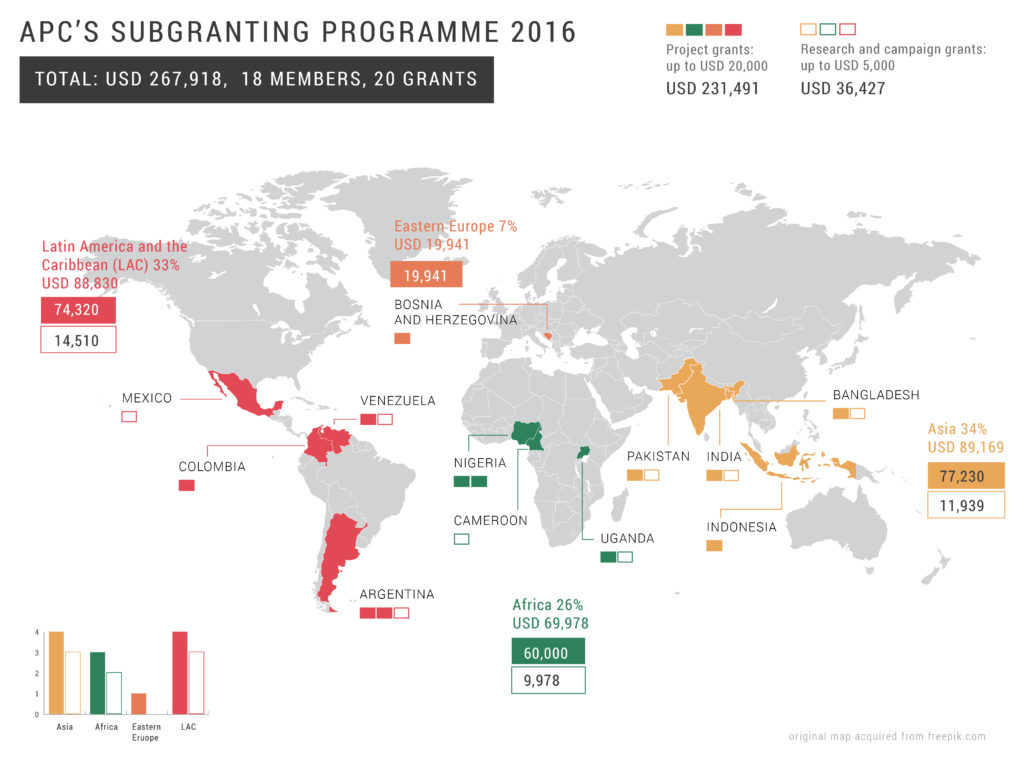
Working locally to achieve a common vision: APC member grants
The project grants are intended to contribute to the implementation
of APC’s strategic plan at the national level, as well as to strengthen
ongoing work of APC members that is linked to APC’s strategic
priorities.
With the funding provided by Sida, APC will be able to support member projects for the next three years. During the first year of the subgranting programme, our members have done incredible work. Check out the project grants implemented in 2016 here, and the small grants here.
Our impact

1. Access
People who are digitally excluded on the basis of where they live, gender, class, disability or identity, have affordable and sustainable connectivity that allows them to share and communicate.
A better connection: Community networks @ IGF 2016
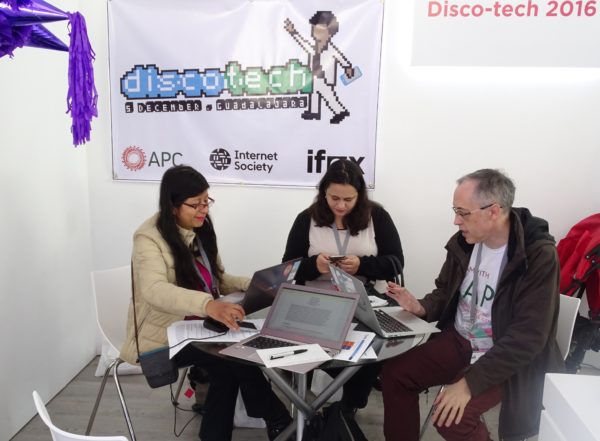
Photo: APC members and partners at the 2016 IGF Disco-tech booth, by Arturo Bregaglio.
There is now a growing awareness of the limitations of the national mobile broadband model and increasing interest in exploring alternative, more decentralised models for reaching the unconnected. A number of APC member organisations are active in supporting the development of community-built communications infrastructure. To raise awareness and discuss the potential for communities to build their own infrastructure, APC joined with ISOC to organise a series of events around local access and community networking during the 2016 IGF, starting with a half-day pre-event which set the scene for a standing room-only main session of the Dynamic Coalition on Community Connectivity (known as the DC3). Another highlight was the “Disco-tech” hosted by APC, IFEX, and ISOC which offered lightning talks on the theme “Community Networks: Civil society’s efforts to improve connectivity in local communities”, including talks from APC members Rhizomatica (Mexico), DEF (India) and Zenzeleni Networks (South Africa). This was followed up with a full-day post-IGF workshop where future strategy on improving the regulatory environment and capacity building for supporting local connectivity initiatives was discussed with a group of about 30 NGOs, activists and researchers.
To watch out for: In 2017, we will focus on creating an enabling environment for communities and local entrepreneurs to solve their own connectivity challenges. In particular, we will work to ensure local connectivity initiatives are able to reach long-term sustainability, support development opportunities, and contribute to meeting the Sustainable Development Goals.
Enabling meaningful internet access for women
Several APC members and partners that work on access, including Point of View, Digital Empowerment Foundation (DEF), Foundation for Media Alternatives (FMA), Rhizomatica and EMPOWER, participated actively in the BPF. DEF, FMA and EMPOWER convened a workshop on access and gender at the Asia-Pacific Regional IGF, and submitted recommendations from the discussion to both the BPF and the IGF Connecting and Enabling the Next Billion document. The outcomes of this work include a formal data partnership with the joint International Telecommunication Union (ITU)-UN Women initiative EQUALS: The Global Partnership for Gender Equality in the Digital Age, and APC’s continued engagement with ITU’s Broadband Working Group on Gender in aggregating research work and indicators. APC also partnered with the Internet Society (ISOC) to explore gender and access by co-convening the “Workshop on Mainstreaming Gender in Internet and Development in the Asia Pacific Region” in Bangkok in October 2016. Participants agreed to convene a working group on gender and the internet for the Asia-Pacific to explore and identify innovative ways to accelerate the access to and use of the internet for women, men and persons with non-binary identities.
To watch out for: The 2017 IGF Best Practice Forum on Gender will undertake case studies on gender and meaningful access for five groups of women facing specific challenges in different parts of the world, including migrant and refugee women, queer women, young women, indigenous women and women with disabilities, and will also produce recommendations based on best practices. Also, watch out for an APC issue paper on gender and access to be published in 2017.
Framing APC’s approach to closing the access divide
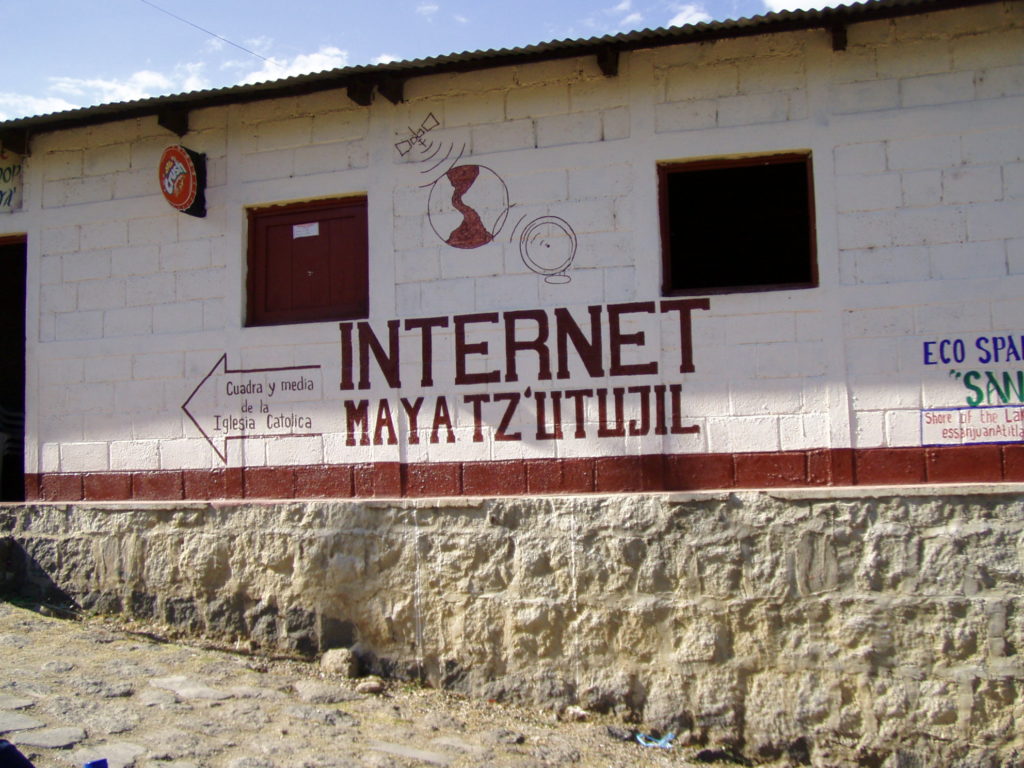
Photo: Internet access point in San Juan La Laguna, Guatemala, by Doug Cadmus used under Creative Commons licence.
Affordable and reliable internet access has become a vital means to exercise fundamental human rights and to support economic, social and human development. However, as the internet becomes more ubiquitous, less is being heard from those who are unconnected – the less wealthy and more marginalised – who are unable to exercise their rights on the same footing as those who are connected.
In April, APC published a position paper, Ending digital exclusion: Why the access divide persists and how to close it, that lays out concrete steps towards not only connecting more people, but also moving the billions who are “barely connected” into a fully pervasive and affordable connectivity environment. In this paper, APC proposes a rights-based approach to access and raise the importance of community-based approaches to access initiatives.
To watch out for: Building on this position paper, in 2017 APC plans to input into the upcoming report of the UN Office of the High Commissioner for Human Rights on bridging the gender digital divide from a human rights-based perspective.
Promoting real access at international events
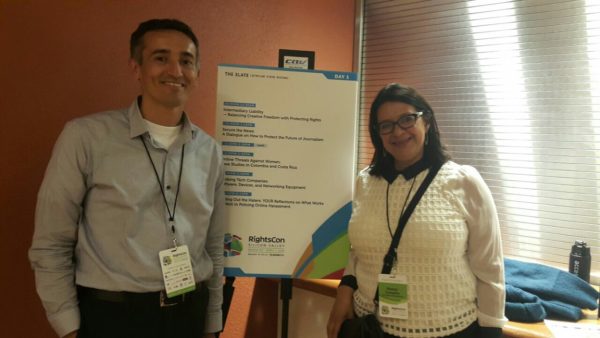
Photo: Ariel Barbosa, Colnodo and Kemly Camacho, Sulá Batsú, at RightsCon 2016, by Colnodo.
APC staff and representatives of 15 member organisations gathered in San Francisco at the end of March for RightsCon Silicon Valley and put access firmly on the agenda.
APC members Women of Uganda Network (WOUGNET) and Foundation for Media Alternatives (FMA) hosted the panel “Real Access for Women Online – Connecting the Next Billions”.
The Dynamic Spectrum Alliance Global Summit that took place in Bogota, Colombia on 26-28 April was benefited by the involvement of APC members Nupef (Brazil) and AlterMundi (Argentina), and was also attended by APC member Colnodo (Colombia). At the summit, APC co-organised a workshop with member organisation Rhizomatica (Mexico) on community networks, helping to build common understanding among the participants of the dynamics of community networking.
To watch out for: Access will continue to be
part of APC’s and its members’ agendas when engaging in events, with a
special focus on community networks.
Member story: Ambassadors for better, faster internet
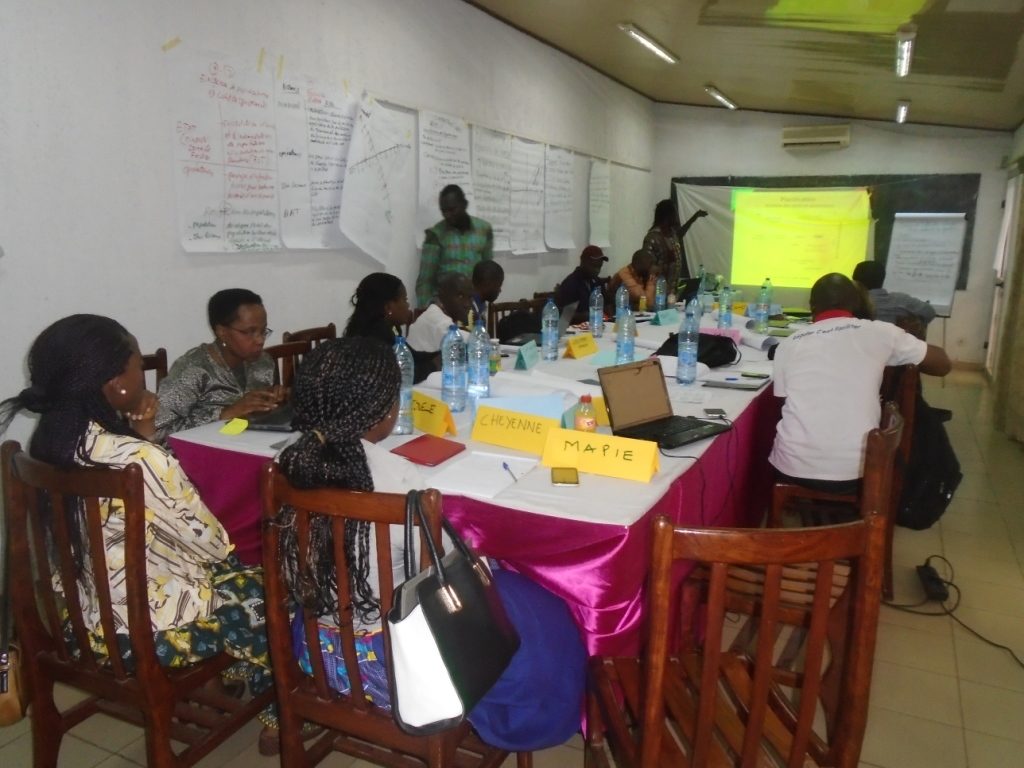
Photo: Participants at the workshop, by PROTEGE-QV.
In December 2016, with the support of an APC member small grant, PROTEGE-QV held a workshop to investigate the reasons behind the relatively poor access to and quality of the internet in Cameroon.
The criteria for the selection of these 20 ambassadors included
ensuring a gender balance, their ability to master the training in the
telecommunications field, and their capacity for conducting an advocacy
campaign.
Member story: Building skills to demand government transparency
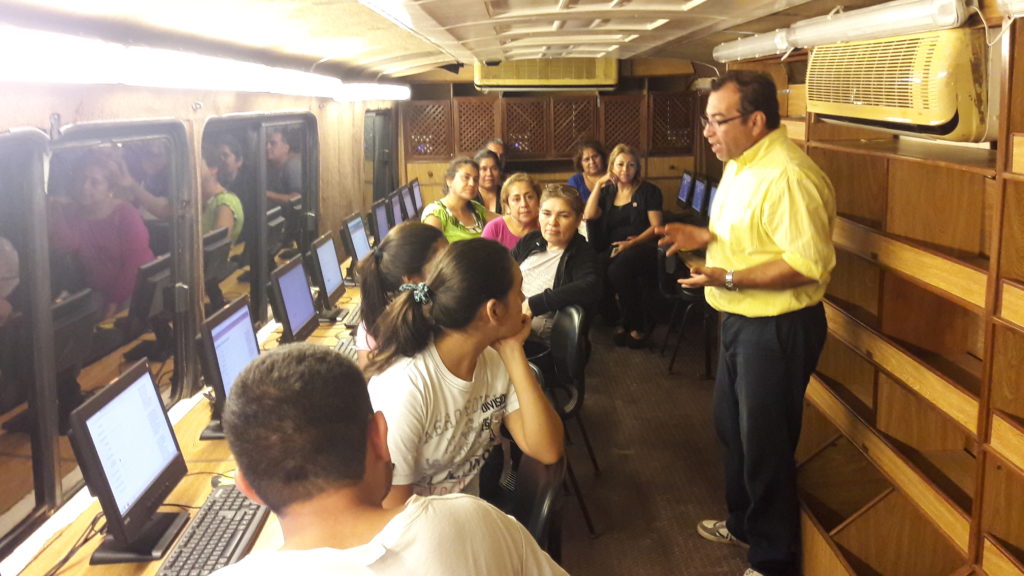
Photo: Asociación Trinidad.
Among the highlights of Asociación Trinidad’s work in 2016 were the activities undertaken as part of its ongoing project Mirá: Observatorio Ciudadano, a citizens’ observatory to ensure the effective implementation of Law 5.282/14 on access to public information and government transparency in the Municipality of Asunción, Paraguay.In particular, they have focused on providing training and capacity building around the law and its implementation for young people, women and neighbourhood organisations.
Their efforts have mainly centred on raising awareness of the existence of this new law, while continuing to work on building skills in the use of new technologies and overcoming the barriers posed by the scarce access to internet connectivity in the outlying neighbourhoods of Asunción.
While the neighbourhood organisations that Asociación Trinidad works with have recognised the importance of access to public information, and the existence of a municipal government website that makes this access possible, they have pointed to deficiencies in the system. In particular, they stressed a lack of information on the conditions for access to funds for special projects.
“On its website, the municipal government only shows what it wants to show. Progress has been made, but it isn’t enough,” they say. Asociación Trinidad will continue to work to ensure that communities have access to the information they consider relevant to their needs.
Member story: Do-it-yourself connectivity for rural communities
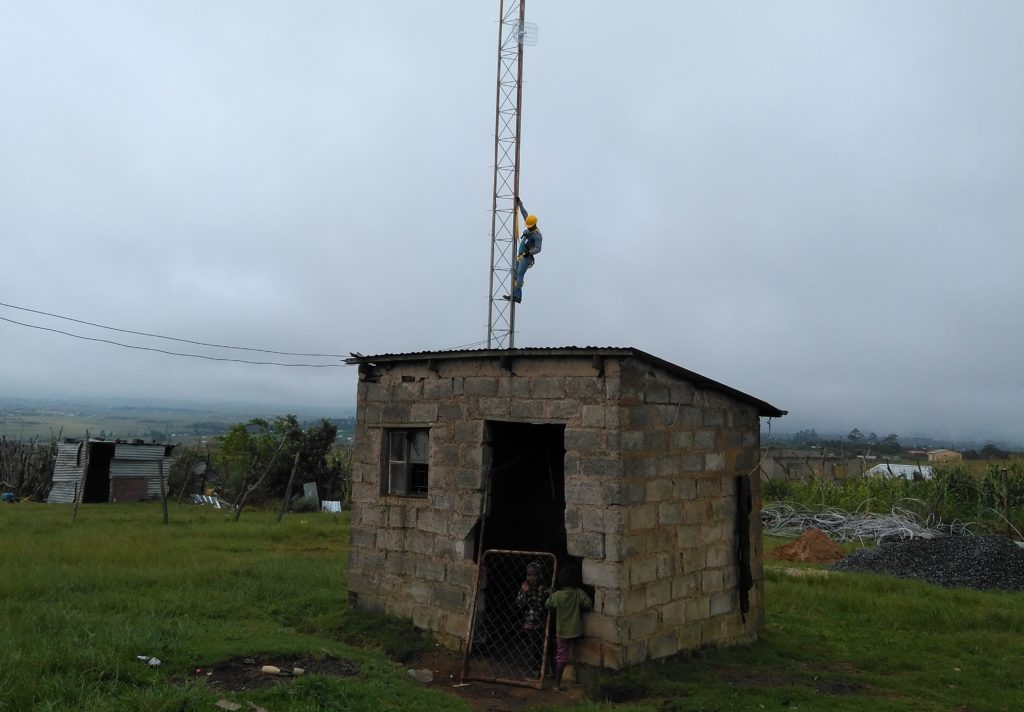
Zenzeleni Networks in Mankosi has finally managed to connect its networks to a cheaper, faster and more reliable internet option.
Due to its remoteness, the options for internet connectivity in Mankosi, as in many other rural – and not-so-rural – areas in South Africa, are very limited. There is mobile data coverage, but its costs, speeds and reliability do not allow for making any productive use of it.
After having engaged to no avail with all the providers that could offer an alternative, they decided to do it themselves, i.e. finding a way to connect their network to the fibre in Mthatha, the closest town, 60 km away as the bird flies. The process entailed using digital elevation maps to plan the most efficient way to do so. They found out that if was feasible by “just” building a 12-metre antenna on an intermediary hill.
With the support of a Beyond the Net grant from ISOC, and after several conversations with the owners of the houses on that hill and the tribal authority in the village, the tower was built in February.
This was followed by an agreement with Walter Sisulu University (WSU), which is allowing them to use one of its tallest buildings in Mthatha as a high site, and, for now, to piggyback on its own internet connection. This tower will not only allow Zenzeleni to provide affordable internet access in Mankosi, but to start working with other communities so they can provide it to themselves.
Member story: Empowering women and girls through ICT
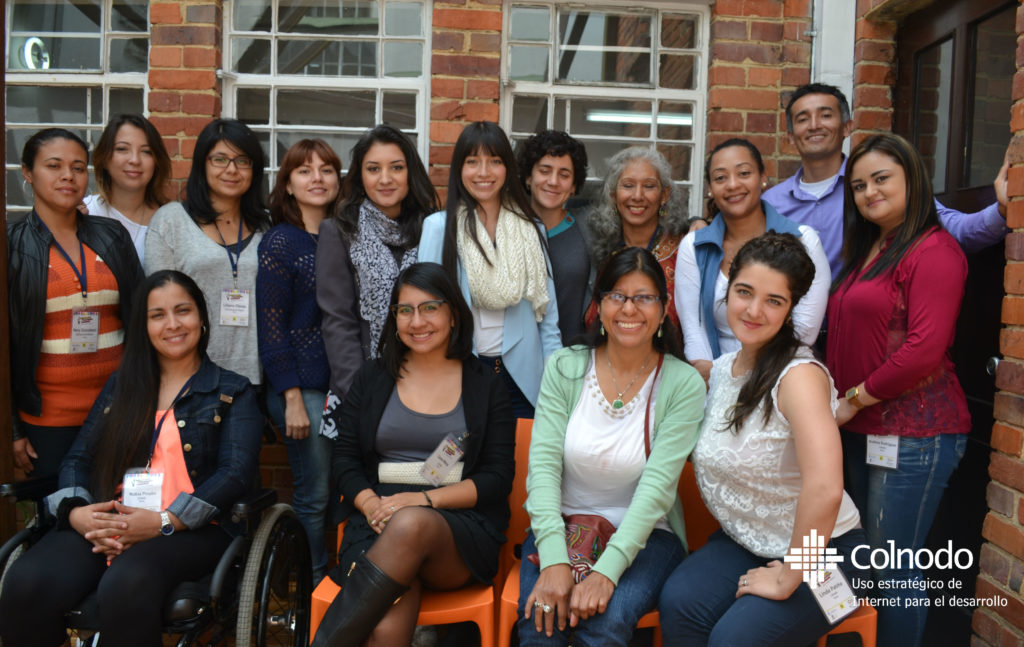
Photo: Ivonne Zapata.
With the support of an APC member project grant, Colnodo developed a new app, PiensaEnTIC, which uses interactive learning activities to raise young women’s awareness of digital security and their internet rights. The app has been downloaded over 600 times.
Colnodo has also continued to develop systems that specifically respond to the growing needs of organisations for simple, accessible and secure information management.
In 2016, this included the development of an information management system for the Urgent Action Fund, which caters to the needs of women’s rights organisations and activists in terms of protecting their digital security and responding to situations requiring urgent support.
The system developed has strengthened the Fund’s work by reducing response times, allowing for more efficient information management, and guaranteeing the security and privacy of data. In addition, the statistics generated by the system can be used for planning future actions.
Colnodo also initiated a new project, “Ella Aprende, Ella Emprende”, aimed at capacity building for women in the use of Facebook to promote their businesses and small enterprises in the city of Bogotá, Colombia. A total of 2,000 women participated in face-to-face training sessions on subjects like creating and managing fan pages for their businesses, content creation, advertising, and generally giving greater visibility to their products and services.
Member story: Out of sight
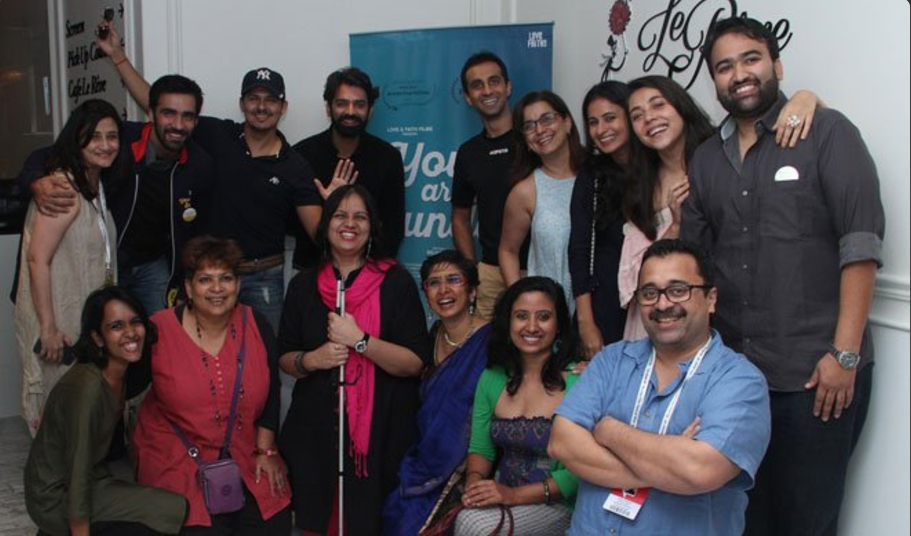
Photo: POV team with film team after the special screening.
Sometimes, a tweak to technology can open your eyes. To what you never saw. So in October 2016, when the Mumbai International Film Festival invited Point of View to collaborate, we suggested a special screening: for those without sight.
Globally, there are more than 285 million people with visual impairment, 90% of whom live in low-income settings. Most of them rarely see movies – simply because most films are not audio-described, that is, they don’t come with an audio narrative throughout the film, especially in the silent bits, where there is no dialogue but some action takes place. Imagine yourself in their place. You’re seated at your laptop, caught in the middle of a romantic comedy, when suddenly, there’s silence. You hear scraping sounds and an occasional rustle or moan. But how do you, without vision, know what’s happening on screen? You don’t know.
Audio-description is the technology that fills this gap. It’s a simple technology that copyright complicates, because the film’s legal owner – the producer – has to permit the addition of this audio-described track to streamed versions, theatrical screenings, etc.
When the producer of Tu Hai Mera Sunday, a Hindi film about five football players, gave Point of View permission to add an audio track, we were ecstatic.
And so it came to pass that for the first time in its history, the Mumbai International Film Festival was able to show a film to those who can’t see. And to those who can see, who wore eyemasks and experienced it as if they couldn’t.
Member story: Putting information in the hands of the rural population
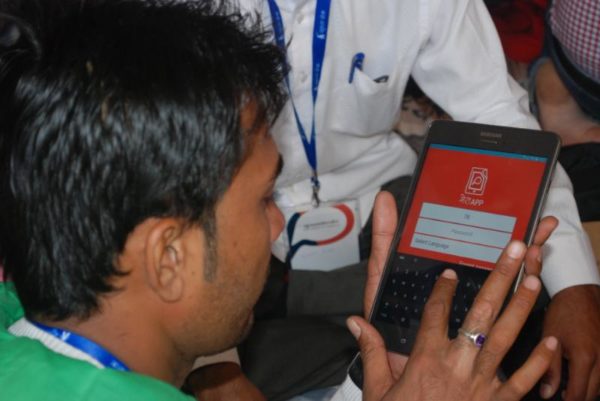
Photo: Digital Empowerment Foundation.
Developed using cutting-edge technology, the Android-based app provides rural India’s vulnerable population with a catalogue of social service schemes, with comprehensive information on entitlements, in an effort to empower them with access to rights and benefits.
Users, assisted by “Soochnapreneurs” (Info-preneurs), can either view the information categorised by provinces and social service areas or enter their socioeconomic details to allow the app to display a list of schemes that suit the information fed into it. A bilingual app that runs on online and offline modes, MeraApp has been envisioned as a platform to empower rural and remote populations with access to information and bring them closer to their rightful entitlements, thus bridging the digital divide and encouraging social and financial inclusion.
Furthermore, the app also allows users to submit grievances to various government portals and track the status of the complaint. In its second phase in 2017, the app will be made available in a third, regional language and a larger group of rural entrepreneurs will be trained in using the app.
Member story: Scale-up grant will enhance connectivity geared to needs of communities

AlterMundi‘s most significant achievement in 2016 was obtaining a scale-up grant from the Regional Fund for Digital Innovation in Latin America and the Caribbean (FRIDA) for the LibreRouter project.
The project was proposed for consideration in Latin America, Africa and Asia, and won grants in both Latin America, through FRIDA, and Africa, through the Fund for Internet Research and Development (FIRE).
The LibreRouter is currently in development and is expected to be available by December 2017. There are more than 20 people from around the globe involved in the development of the router and related technologies.
This device will allow community networks worldwide to access an affordable, high-performance multi-radio router that is ideal for mesh network deployments. Its design has taken into consideration the needs of communities in every aspect. Both the software and the hardware will be available as free/libre developments.

2. Rights
Human rights norms and standards integrate gender and development, and are respected and promoted in internet and ICT policy, governance, development and practice.
Foregrounding internet rights at the Human Rights Council
In July, the HRC adopted its biannual resolution on human rights and the internet, which reflected key APC priorities, including ending the unacceptable practice of internet shutdowns. APC also contributed to the annual report of the UN Special Rapporteur on freedom of expression, which focused on the ICT sector and enabled us to help shape his work in this area
in the coming years. On the five-year anniversary of the adoption of
the UN Guiding Principles on Business and Human Rights, APC released the
issue paper “Taking stock of the UN Guiding Principles for Business and Human Rights in the ICT sector”, which was presented during a side event at the HRC in June.
APC also engaged in the UN General Assembly, focusing on the resolution on the right to privacy in the digital age, which passed in December. This resolution represented progress at the normative level around protecting the right to privacy in the context of data processing, the role of the private sector, secure communications, and for the first time addressed the gender dimension of the issue.
To watch out for: APC will continue its advocacy on internet rights at the HRC. For 2017, we are preparing a workshop on the right to privacy in the digital age.
GISWatch reaches milestone 10th edition
Since its inaugural edition in 2007, Global Information Society Watch (GISWatch) has provided the international community with yearly reports on the state of the information society from the perspective of local civil society organisations and experts from all around the world.
The report was launched at a special event held during the Internet Governance Forum (IGF) in Guadalajara, Mexico, with the participation (both in person and remote) of a number of the authors of thematic and country reports. A selection of GISWatch 2016 thematic and country reports were also translated into Spanish and Portuguese and published as a co-edition of the ALAI magazine Latin America in Movement.
To watch out for: Get ready to be surprised by GISWatch in 2017! The only hint we can offer is that there will be more than one…
Groundbreaking work to expand the focus of internet rights advocacy to economic, social and cultural rights
The three-year project culminated in 2016 with the publication of research reports on the internet domain name system and the right to culture, linkages between ESCRs and intellectual property rights advocacy, and the role of the internet in the provision and accessibility of educational resources.
In addition, a special edition of the Global Information Society Watch report focused on ESCRs and the internet.
APC also contributed to shaping the Internet Governance Forum (IGF) main session on internet rights which, for the first time, specifically addressed ESCRs. We also began engaging in policy advocacy in regional and international human rights mechanisms around ESCRs. For example, APC testified at a hearing at the Inter-American Committee on Human Rights on the right to culture and the internet.
APC worked with member organisation Jinbonet and partner organisation OpenNet Korea on a joint submission to the UN Committee on Economic, Social and Cultural Rights focusing on copyright as a barrier to the exercise of cultural rights online. And a special edition of the GenderIT.org newsletter provided a feminist take on ESCRs and the internet.
To watch out for: A training module on ESCRs and the internet will be finalised along with various analytical advocacy tools to expand our work in collaboration with other actors, such as national human rights institutions in Africa and Asia. We will also support our partners to specifically engage with the UN Committee on ESCRs.
Landmark resolution recognises contribution of African Declaration on Internet Rights and Freedoms
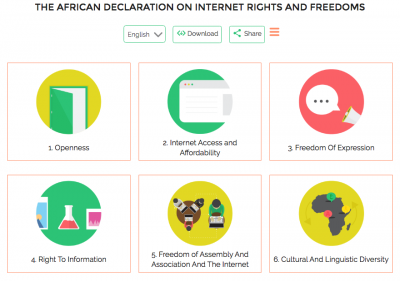
The African Commission on Human and Peoples’ Rights (ACHPR) adopted a landmark resolution in November on the Right to Freedom of Expression on the Internet in Africa. The first of its kind passed by the Commission, the resolution recognises the role of the internet in advancing human and peoples’ rights in Africa and specifically acknowledges the value of the African Declaration on Internet Rights and Freedoms as a document that “elaborates on the principles which are necessary to uphold human and people’s rights on the Internet, and to cultivate an Internet environment that can best meet Africa’s social and economic development needs and goals.” The African Declaration initiative, of which APC was a founding member, set passing this resolution as a goal, and this achievement is indicative of the influence of the coalition and Declaration in a relatively short period of time.
In July, APC launched a new platform for the African Declaration, Engage.AfricanInternetRights.org. This interactive platform, initially launched in English and French, serves as a space where human rights defenders, activists, lawyers, journalists, policy makers, service providers and anyone interested in internet rights, particularly on the African continent, can view the Declaration and supplementary content related to each principle, read an FAQ about the Declaration, and also add their own research, publications, events, videos and images.
To watch out for: In 2017, APC will conduct a training on internet rights for national human rights institutions in Africa. As well, the Engage.AfricanInternetRights.org platform will be translated into Portuguese and Arabic to reach an even wider audience in Africa.
Making the connection: National to international bodies, and back down
We also supported the work of a coalition of Sudanese human rights defenders who raised violations of freedom of expression, including online, protection of journalists, and violence against women journalists for Sudan’s UPR.
APC, together with Right2Know and Privacy International, raised concerns around South Africa’s surveillance practices and privacy protections when the country went under review at the Human Rights Committee in March. The Committee issued hard-hitting recommendations reflecting our concerns, specifically calling on the government of South Africa to increase the transparency of the law governing surveillance, establish independent oversight mechanisms, ensure that people who are targeted for surveillance have access to effective remedies, stop engaging in mass surveillance without the express authorisation of a judge, and consider revoking or limiting the requirement for mandatory retention of data by telecommunications and internet service providers.
To facilitate further engagement with international human rights mechanisms, APC also published an issue paper that explores how local groups in the Middle East and North Africa are engaged in internet-related rights advocacy at the national and regional levels, and how that reflects upon the inclusion of these issues in the UPR process. We also contributed to a guide on how to use UPR to advance internet rights.
To watch out for: In 2017, APC will be working with members and partners to bring national concerns regarding internet rights to international human rights mechanisms in a number of countries, including India, Lebanon, Pakistan, South Africa and South Korea.
New research and tools for monitoring internet rights in Latin America
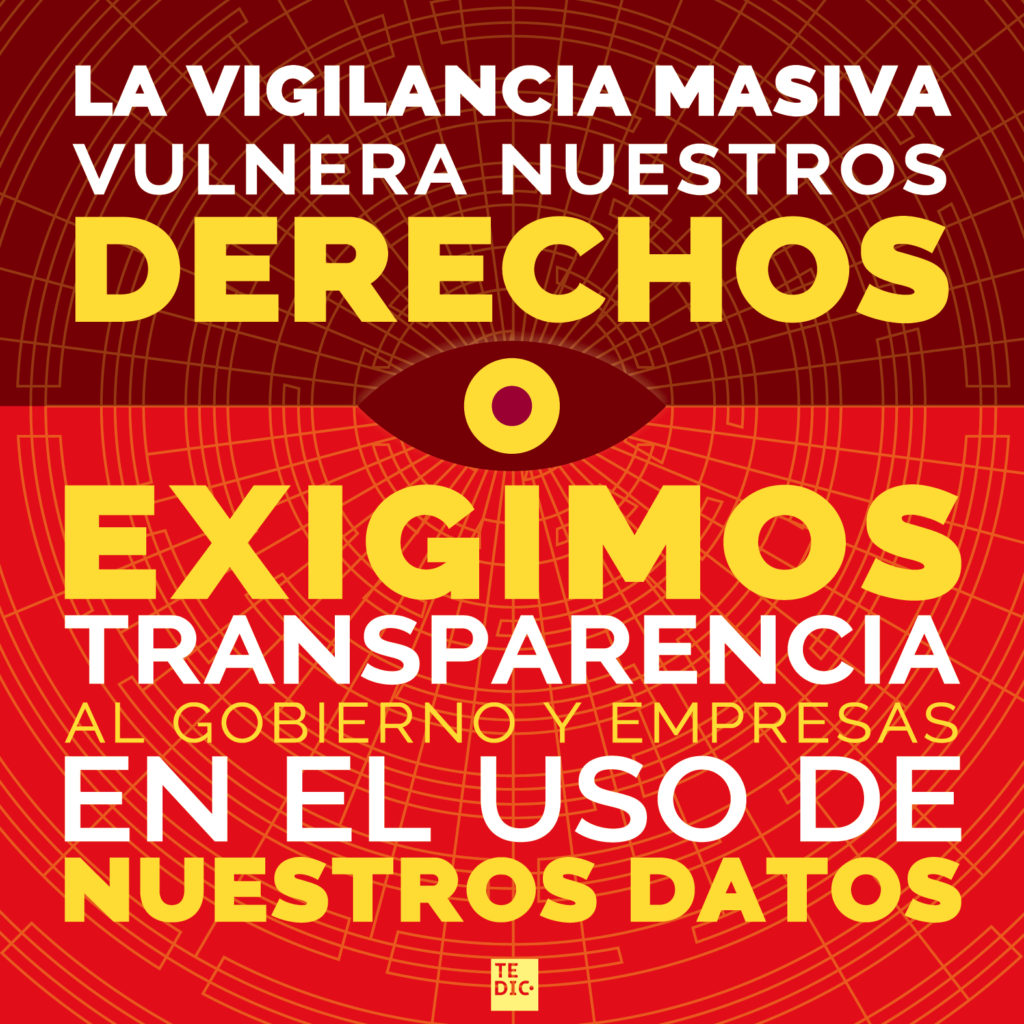
Photo: Banner of the #pyrawebs campaign by TEDIC, Paraguay.
The project produced a new module for the APC Internet Rights Are Human Rights training curriculum, focusing on Inter-American Human Rights System instruments and their application to the digital environment as well as a framework to monitor the situation of human rights online in Latin America and the Caribbean (LAC) based on the original APC-La Rue framework, but tailored to the region.
To watch out for: APC plans to organise a regional training in LAC on utilising regional and global human rights mechanisms to advance internet rights, drawing on the resources produced through the EXLILA project.
Pinning down gender at the Human Rights Council

Photo: Image from “Changing patterns” digital story video in stories.apc.org.
2016 also saw many APC efforts regarding gender and gender-based violence reflected in UN Human Rights Council (HRC) and Special Rapporteur statements.
In June, the HRC called upon all states “to bridge the gender digital divide and enhance the use of enabling technology, in particular information and communications technology, to promote the empowerment of all women and girls.”
Special Rapporteur David Kaye’s report on freedom of expression and the private sector in the digital age specifically noted that the world’s most popular online platforms do not adequately address the needs and interests of vulnerable groups, and are reluctant “to engage directly with technology-related violence against women, until it becomes a public relations issue.” He also called on internet governance frameworks to be sensitive to the needs of women, sexual minorities and other vulnerable communities.
To watch out for: In 2017 we are looking forward
to exciting advocacy opportunities, in particular on a report on online
gender-based violence and another on content regulation online.
Promoting and protecting human rights online in India, Malaysia and Pakistan
The APC-IMPACT project,
which is being implemented jointly with members and partners in India,
Malaysia and Pakistan, continued to advance internet rights in a region
where they are increasingly under threat. The project released a
regional research report
on the state of freedom of peaceful assembly and of association online.
The research framed key trends and challenges in the region, and was
presented at regional and international meetings such as the
Asia-Pacific Regional IGF, RightsCon and a side event at the Human
Rights Council with the UN Special Rapporteur on freedom of assembly and
association.
APC-IMPACT brought critical national and regional issues to the global level through a roundtable that the project hosted with human rights defenders (HRDs) from the region with the UN Special Rapporteurs on freedom of expression and opinion, violence against women, and the right to privacy, as well as statements on the impact of religion on freedom of expression and women’s rights online and the state of internet rights in India, Malaysia and Pakistan for UN Human Rights Council sessions.
To watch out for: APC-IMPACT partners will
publish national level reports on freedom of assembly and association
online, as well as a thematic report on religion and hate speech online.
The project is also planning to organise a regional consultation on
freedom of expression, religion, and assembly and association online
with the respective UN special procedures and HRDs from the region.
Member story: Civil society filibuster against anti-terror bills in South Korea
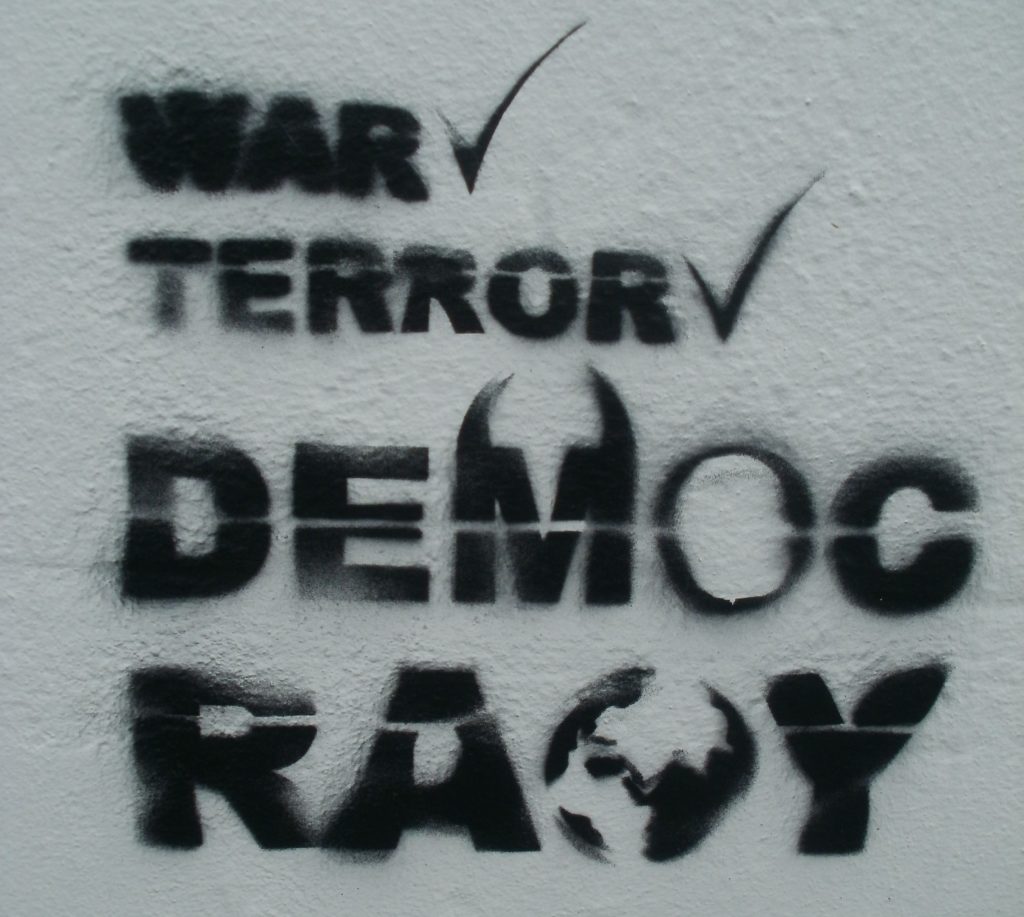
Photo: Feral78 on Flickr.
On 23 February 2016, the chairperson of the South Korea National Assembly tabled the bills ex officio, on the pretext of a state of national emergency – with which many people did not agree – bypassing proper procedure and the hearing of public opinion. Opposition lawmakers conducted a filibuster lasting over 192 hours, which was the first time this tactic had been used in South Korea.
Civil society activists, including Jinbonet, also conducted a “civil filibuster” on the street in front of the National Assembly, despite the cold winter wind. The Anti-Terror Bill was finally passed by the National Assembly on 3 March, but the Anti-Cyberterror Bill was fortunately not passed.
The filibuster was broadcast live and provided an opportunity to vividly communicate the problems posed by the Anti-Terror Bill to the people, and although it did not stop it from being adopted, it helped to raise public awareness.
Member story: Internet rights in Argentina
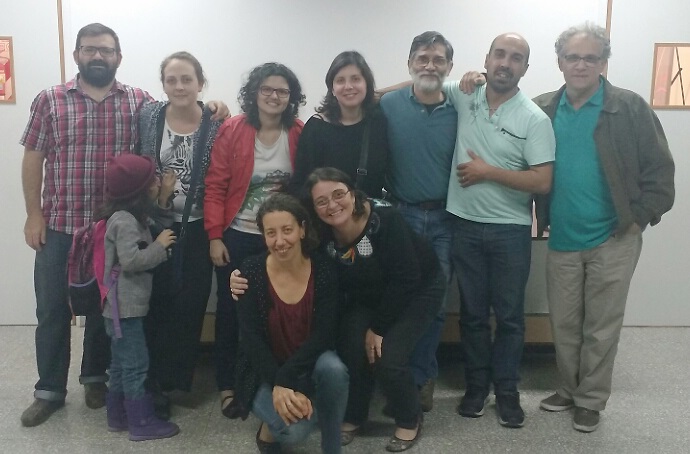
During 2016, and with the support of an APC small grant, Nodo TAU carried out the multi-stage project “Internet Rights in Argentina”, aimed at raising awareness of these rights and violations against them, researching local concern about the issue, and establishing a network of organisations and individuals interested in working on this issue for future capacity building and advocacy.
The project began with a survey among civil society organisations to obtain an accurate description of local concern about internet rights, but also to learn more about the local situation in terms of use, risks and interests.
The second stage consisted of the coordination of a workshop held in October and attended by analysts and activists working from a rights-based perspective on issues like gender, security, big data, free/libre software, public policies and governance. We proposed a methodology in which each of them offered presentations on specific issues, to share views and exchange information, but also to agree on a local agenda for internet rights work.
The project concluded in December with a meeting of participants from the workshop and members of organisations in the communications field, in order to initiate the building of a local space to bring these different actors together in order to follow policy processes and debates, to propose capacity building for local actors, and to carry out advocacy work in relevant spaces.
As is the case with all of Nodo TAU’s initiatives, we emphasised meeting with other organisations to share knowledge, question our own practices, and review the inclusion of ICT in our work, always with the aim of strengthening local communities. The project served the valuable purpose of coordinating various actors for future work in the internet rights field.
Member story: Supporting the digital rights movement in Myanmar
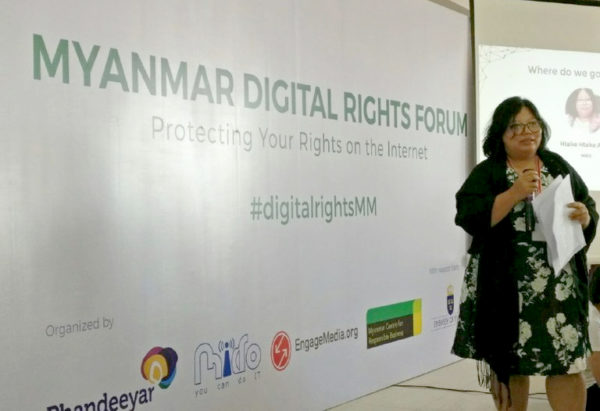
Photo: Co-organisers MIDO addressing the Myanmar Digital Rights Forum. Credit: EngageMedia.
Amidst troubling trends in relation to digital rights and internet freedoms in Myanmar in 2016, EngageMedia partnered with Phandeeyar, MIDO and the Myanmar Centre for Responsible Business to host the first Myanmar Digital Rights Forum (MDRF).
With over 90 participants, the MDRF provided a platform for long-time advocates for digital rights (working both locally and internationally) to discuss issues with different stakeholders. The topics tackled in the forum reflect the current and emerging trends in and threats to digital rights in Myanmar: surveillance, content restrictions and lawful interception standards; freedom of expression and hate speech; harassment of journalists; policy reform; the right to information; national identification; and privacy issues in the current laws.
The MDRF was also an opportunity for digital rights movements from across the region to learn from each other – and to encourage the growth of the Myanmar digital rights movement – with sessions that shared experiences around building social movements on policy reform, and looking back on the digital rights movements in India, the Philippines and Myanmar.
The two-day event resulted in a range of concrete actions and plans. Among these, a statement against Myanmar’s Privacy and Protection Law was signed by the Forum participants and sent to Parliament. EngageMedia is fortunate and thankful to have been able to be part of this milestone event, and to witness the continued growth of the digital rights movement in Myanmar – one that we will continue to proudly support.
Member story: Third edition of Latin America in a Glimpse
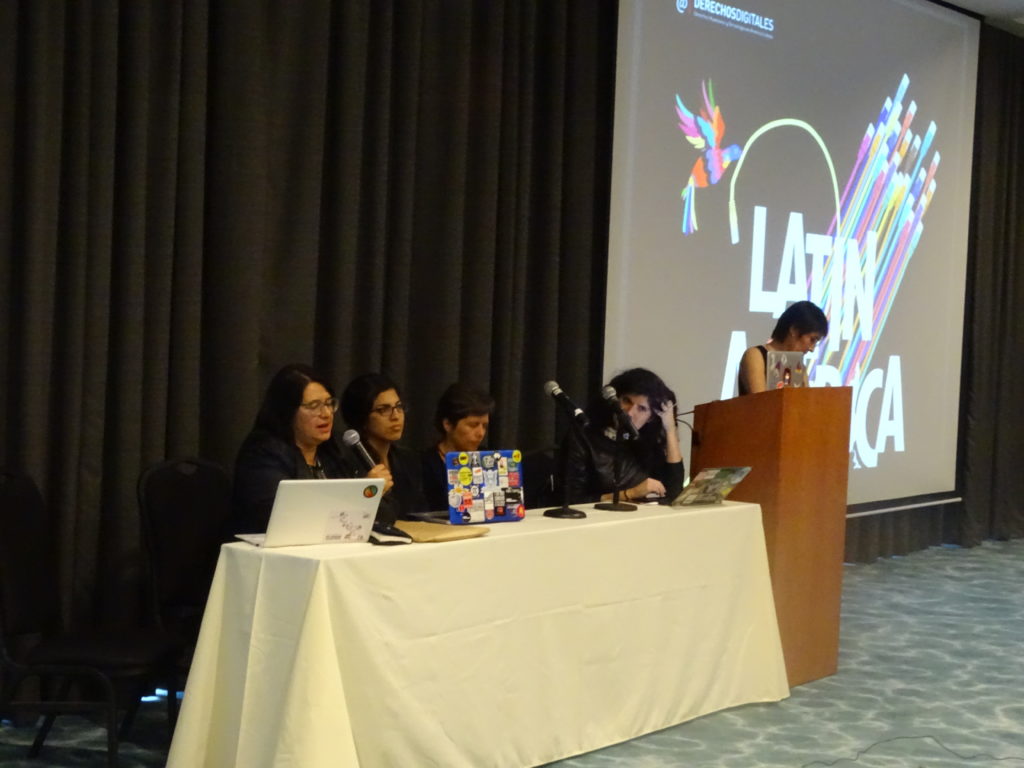
Photo: Presentation of the third edition of Latin America in a Glimpse at the 2016 IGF, by Arturo Bregaglio.
Once again, the report was released during the annual Internet Governance Forum (IGF), which took place in Guadalajara in 2016, as a means of reaching a wide range of stakeholders from the international community, including considerable representation of Latin American civil society.
The launch was attended by a significant number of participants, which reaffirmed our commitment to continuing with this initiative in the coming years.

3. A feminist internet
Women’s rights and sexual rights activists engage with internet and ICT policy and development as feminist issues.
Amplifying women’s voices through digital storytelling
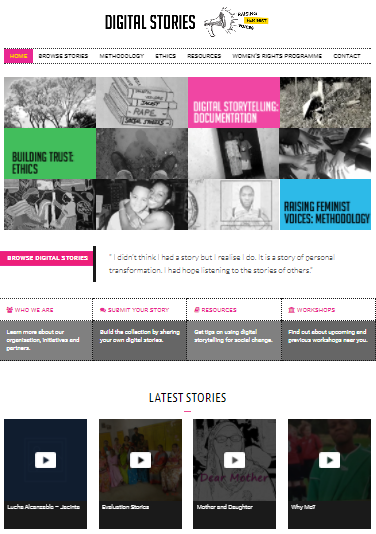
In 2007, APC member Women’sNet hosted a digital storytelling workshop with survivors of gender-based violence to process and produce digital stories. It was a powerful experience for trainers and participants alike, and inspired the African network of the APC Women’s Rights Programme (WRP) to host a similar workshop for the region in 2007, and One World Platform and Women’sNet to take advantage of the APC Member Exchange and Travel Fund to carry out a regional workshop in Bosnia in 2008.
Since then, APC has trained many people in the use of digital stories for activism, whether it is used by women to combat violence against women, or by people living with disabilities and their families or transgendered people to tell their stories.
In December 2016, APC launched a new digital storytelling platform, which features a collection of stories from workshops we have been involved with over the years, as well as resources and information on digital storytelling methodology.
To watch out for: Given the power and popularity of storytelling in the feminist movement, APC WRP will keep using elements of storytelling in various workshop spaces. We will be capturing the methodologies and making these available on the stories.apc.org platform.
Building collective knowledge towards deepening understanding, influencing discourse and shaping agendas

Photo: Jeremy Keith under Creative Commons license.
GenderIT.org produced the “Three issues for a feminist internet: Access, agency and movements” edition in close collaboration with the Feminist Principles of the Internet (FPI) network.
In 2016, GenderIT.org published 17 columns on gender, ICTs and climate change; digital technologies and trans* people; women’s rights and internet access; and young women and technology.
GenderIT.org editions have also seen very high reads, with 8,500 for the FPI edition, and more than 6,000 each for the Take Back the Tech! and AWID Forum editions, with one article exploring movement building by Dalit women and Kurdish women gettiing more than 14,000 reads. We were also able to develop a policy database on women’s rights, human rights and the internet.
Two issue papers were commissioned and produced to explore the increasingly critical area of big data and its impact on sexuality and gender. One focused on its impact on groups and people who are vulnerable because of gender or sexuality, while the other addressed how big data links to efforts around the Sustainable Development Goals (SDGs) require a critical feminist framework on development.
To watch out for: In 2017, APC will undertake research that maps trends and key issues on feminism, gender and ICTs to support the building of a research network for the International Development Research Centre (IDRC); and a South Asia-focused GenderIT.org edition will bring together work from the IMPACT and EROTICS South Asia projects.
Building feminist futures at the AWID Forum
The APC Women’s Rights Programme (WRP) put together a team of over 25 staff and members to participate in the Association for Women’s Rights in Development (AWID)’s “Feminist Futures: Building Collective Power for Rights and Justice” international forum held in Costa do Sauípe, Brazil in September.
APC held a one-day pre-event to “Imagine a Feminist Internet”, where the Feminist Principles of the Internet framed discussions on feminism and technology. The day ended with a speed-geeking session where the more than 70 participants from 33 countries connected with emerging initiatives that interconnected feminist politics and the internet. During the Forum, APC hosted the Feminist Internet eXchange Hub to put feminism – in all of its diversity and creativity – at the heart of engagement with technology, bringing together activists, researchers and techies working on advancing a feminist internet attending the AWID Forum.
Twenty-five sessions were hosted in the Hub during the three-day Forum. Wikimedia launched Whose Knowledge, mapped women’s initiatives on the internet and hosted an ongoing editathon. The Ideas Adapt space for testing and sharing ideas featured initiatives like SKIRTS (Socially Keen Individuals Redefining Tech Spaces) from Kenya and the launch of feminist petition site Manifesta. The Femhack Lab offered hands-on tech interaction, including how to make videos via mobile phone with Sandía Digital and Witness, and how to produce audio podcasts with Radio Concha, who also provided a live audio stream of Hub activities (and of Forum plenaries) and organised the Take Back the Tech!-inspired “Public Autonomous Anonymous Group Sexting” session.
On Day 3 of the Forum, APC WRP manager Jac sm Kee was one of the provocative storytellers on stage to help “Imagine a feminist future”, captivating more than 2,000 Forum participants: “This is the story about the present, told as the past, from the gaze of the future.”
To watch out for: APC’s movement building towards a feminist internet will continue, with a third gathering of feminists in 2017.
Feminist Principles of the Internet 2.0
The collaboratively developed Feminist Principles of the Internet (FPIs) emerged from “Imagine a Feminist Internet” meetings that took place in Malaysia in 2014 and 2015 with diverse activists and advocates working in sexual rights, women’s rights, gender-based violence, and internet rights.
Version 2.0 of the FPIs was launched in August 2016 on a new interactive web platform. The platform allows for the creation of a user account that can be used to add new resources, case studies, suggested readings, etc., linked to the different Principles. It also features an events section and FAQ section. Throughout the year, the FPIs were featured and used to frame conversations regarding gender and technology in a variety of events and scenarios, such as hacker spaces in Brazil, Take Back the Tech! events, the 2016 Association for Women’s Rights in Development (AWID) Forum, digital security workshops, and more.
The FPIs provide entry points and a framing to question and understand the politics of the internet from a feminist lens.
In Montevideo, Uruguay, members of the APC Women’s Rights Programme network in Latin America and the Caribbean (LAC WRP) used the FPIs to frame the “Women in the digital economy: Challenges to inclusion and equity” panel, held during the 13th LAC Regional Conference on Women. In South Africa, sex workers examined internet access and economy via the FPIs.
In India, EROTICS South Asia project partner and APC member Point of View held an “Imagine a Feminist Internet” meeting on gender, sex and technology and explored questions such as: “Is internet access for women being increasingly binarised into ‘good access’ and ‘bad access’? How is micro-targeted digital porn changing human sexuality? And are the consequences of tech surveillance gendered?” FPI City Conversations emerged as a methodology for partners to create encounters for exploring the FPIs and how they relate to specific contexts, and a first one took place in Beirut.
To watch out for: Explore the FPIs using different methodologies from the new FTX: Safety Reboot curriculum, to open up a conversation on the feminist politics of the internet in your community, and through FPI City Conversations in different locations organised by APC as well as partners.
Ten years of taking back the tech to fight gender-based violence
2016 was an outstanding year for the Take Back the Tech! campaign. TBTT celebrated its 10th anniversary with a 2016 campaign theme of “Our collective story: Women who shaped technology”. Participants in at least 25 countries reached more than four million people through online and offline actions for the 16 Days of Activism Against Gender-Based Violence (25 November-10 December).
Among other initiatives, campaigners made playing cards of women pioneers in tech from their communities; a blog call with AWID for young women to express how they have connected to online feminist activism resulted in seven posts in multiple formats (essays, comics, videos) from six countries; a 10-woman discussion group on online visibility and digital security in the Philippines led to the creation of a network to document and provide support to women experiencing online harassment; and the PiensaEnTIC app was created by APC member Colnodo to support young women in digital security practices in Colombia.
The anniversary was also marked with a video, a timeline representing 10 years of Take Back the Tech! activities, a special TBTT edition of GenderIT.org, and a celebration party in Brazil that took advantage of over 70 campaigners and allies attending the AWID Forum!
Another major event took place in May, when the 2016 Womanity Award for the Prevention of Violence Against Women was presented to Take Back the Tech! and Mexican feminist media collectives Luchadoras and Sandía Digital.
The Womanity Award aims to strengthen creative and positive responses to addressing online gender-based violence, as well as movement building through institutional and network strengthening, documenting learnings, facilitating conversations, and collective action.
The shared vision for implementing Take Back the Tech! in Mexico can be seen through the “Women Shape the Web!” video prepared for the Award. The campaign’s key approach grounds actions in contextual realities, strength and analysis, and the power of networks to organise for change. There are six collectives who have come together for the three-year Mexico TBTT project, organised under the banner of “Siemprevivas: Acción y Tecnologia”.
To watch out for: The Take Back the Tech! game is being piloted and will be released in 2017.
Member story: Pushing the agenda for digital inclusion of women
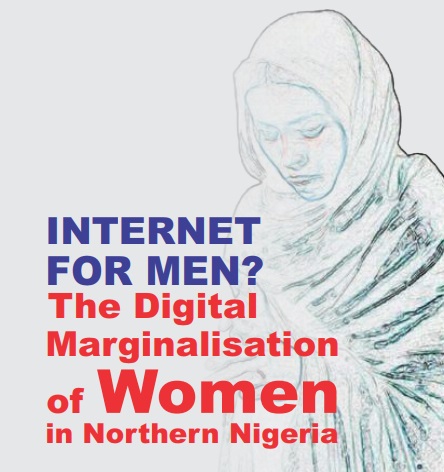
Women in Nigeria are digitally marginalised, especially in the northern part of the country where culture, religion and low female educational levels have combined to shut out women and girls from the internet. As part of the effort to overcome this, the Centre for Information Technology and Development (CITAD), with the support of an APC project member grant, implemented a project aimed at promoting the digital inclusion of women.
For this reason, we mounted a campaign on online safety and security for women. The campaign commenced with two stakeholders meetings held in Bauchi and Kano. This was followed with the convening of a sub-national Internet Governance Forum with the theme “Internet of Our Choice: Empowering Women and Protecting Children Online”.
The forum resulted in the Bauchi Declaration, which aimed at promoting greater access to the internet for women by mobilising various stakeholders to support gender digital inclusion.
To further address the issue of insecurity, CITAD held a two-day
training for a core group of women activists drawn from 10 states from
the northern part of the country, aimed at enhancing their capacity on
internet safety and security. These women became key advocates for the
digital inclusion of women.

4. Governance
Internet-related and ICT policy processes protect the publicness of the internet and are accessible, democratic, transparent, accountable and inclusive.
A human-rights based approach to cybersecurity
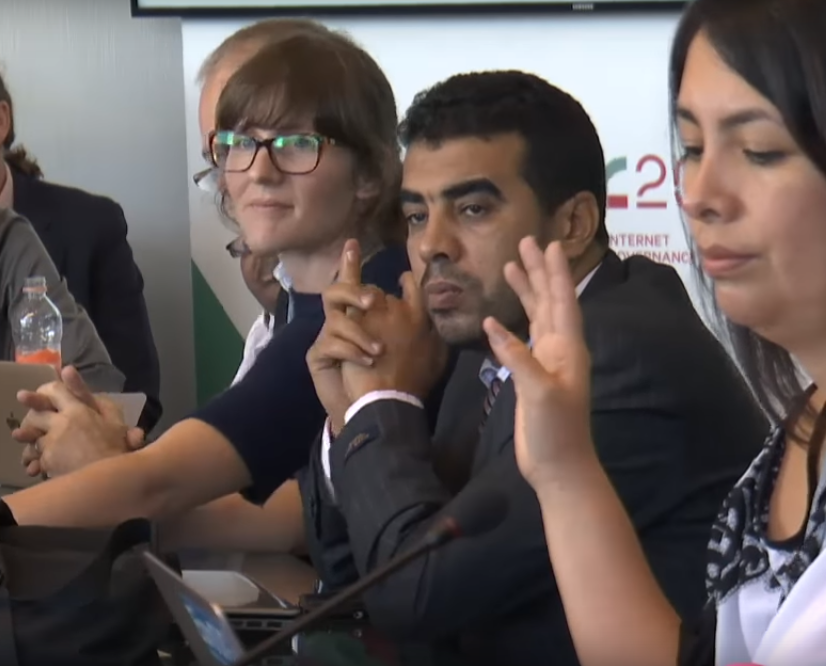
Photo: Mallory Knodel at the Best Practice Forum on Cybersecurity, IGF 2016.
At the sixth annual Freedom Online Conference in October, APC contributed to the development of a normative document of the Freedom Online Coalition (FOC) that promotes human rights-based cybersecurity policy.
This document gained the endorsement of 30 government member states
of the FOC and dozens of civil society, private sector and academic
supporters.
“These recommendations,” reads the preamble, “are a first step towards ensuring that cybersecurity policies and practices are based upon and fully consistent with human rights – effectively, that cybersecurity policies and practices are rights-respecting by design.” The recommendations are aimed at policy makers and other stakeholders engaged in issues of cybersecurity.
They touch upon, among other issues, the security of persons online and offline, responses to cyber threats, encryption and anonymity, and cybersecurity capacity building.
To watch out for: In 2017 we will build
capacities among civil society for advocacy in cybersecurity, as well as
participate in the Global Commission on the Stability of Cyberspace.
Advancing multistakeholder internet governance at WSIS
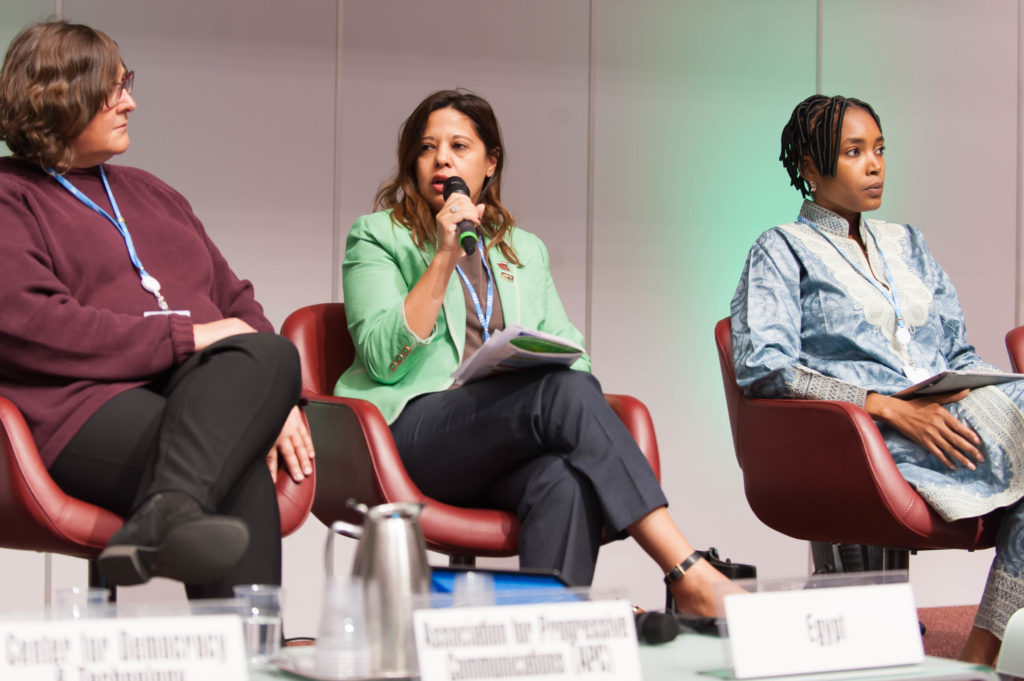
Photo: ITU Pictures from Geneva, Switzerland, under Creative Commons licence.
During the annual World Summit on the Information Society (WSIS) Forum in May, APC Executive Director Anriette Esterhuysen spoke
during the high-level policy session, where she addressed some key
persistent challenges that must be overcome to create and strengthen
conducive enabling environments so that all people, worldwide, are able
to use ICTs to their advantage.
APC also organised a workshop at the Forum, “Advancing Internet Governance Principles and Practice”.
To watch out for: We plan to continue our
engagement at the annual WSIS Forum by participating again in the High
Level Track and together with members organising a workshop on local
access initiatives.
Building inclusive internet governance leadership in Africa
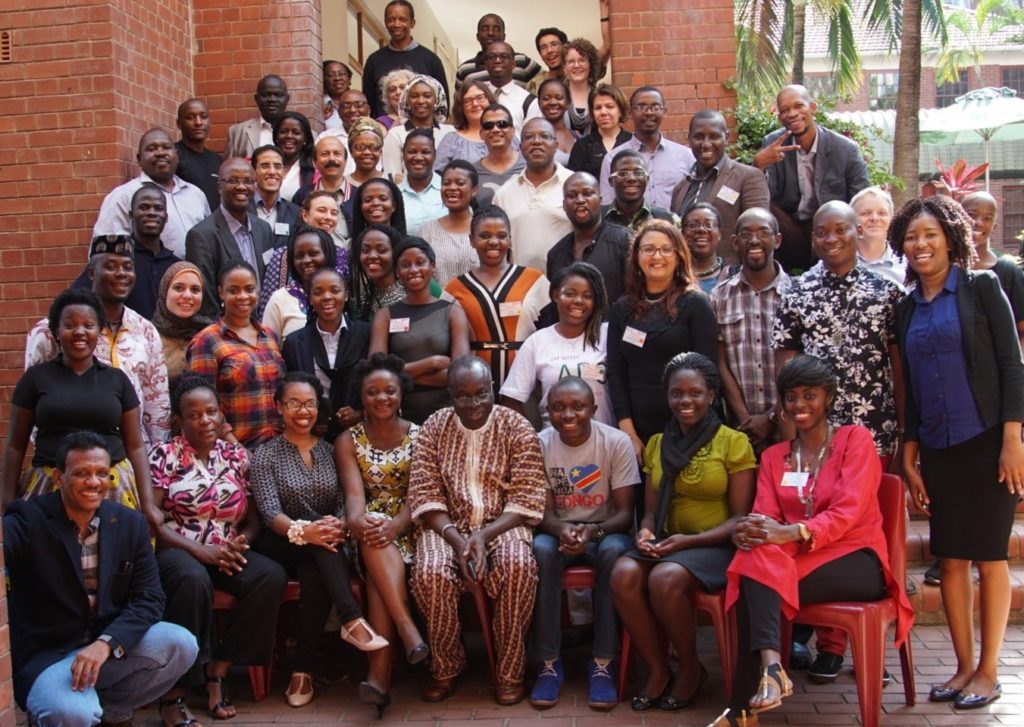
On 11 to 15 October, APC and the NEPAD Planning and Coordination Agency (of the African Union) convened the fourth African School on Internet Governance (AfriSIG), where participants from different stakeholder groups throughout Africa gain the knowledge and confidence they need to actively participate in internet governance discussions and processes.
AfriSIG 2016 was held in Durban, South Africa, and involved a class of 44 participants and 20 faculty and resource people. A linked Gender and Internet Governance eXchange (gigX) event (organised by APC members Women’sNet and WOUGNET) integrated women’s rights, internet rights and sexual rights activists and issues into AfriSIG and built awareness and understanding of the relationship between gender, women’s rights and internet governance. Participants in both events were able to immediately put the knowledge and skills they had acquired into practice at the the fifth African Internet Governance Forum (AfIGF), also in Durban, on 16-18 October.
The gigX is part of a two-year project, “Increasing women’s decision making and influence in internet governance and ICT policy for the realisation of women’s rights in Africa”, funded by the UN Women Fund for Gender Equality and implemented by Women’sNet and WOUGNET in South Africa and Uganda with support from APC staff. The project includes city conversations around the Feminist Principles of the Internet and digital security training.
To watch out for: The AfriSIG website will be revamped to better reflect how this initiative is positively changing the internet governance landscape in Africa year after year.
Continued engagement in the global Internet Governance Forum
APC’s participation as IGF Multistakeholder Advisory Group members contributed to a main session on human rights, linking economic, social and cultural rights with civil and political rights, foregrounding and making connections between issues such as the right to information and economic empowerment, access and good governance, and more – all with a solid gender focus.
There was strong participation by sexual rights and feminist activists at the IGF, with many first timers familiarising themselves with the space, at the pre-IGF crash course on gender and internet governance organised by APC. EROTICS South Asia project partner and APC member Point of View organised a workshop on “Sex and Freedom of Expression” that shared initial findings from the EROTICS South Asia country research. Point of View and fellow APC member Foundation for Media Alternatives continued to co-coordinate the Dynamic Coalition on Gender, and there were notably more sessions that explored multiple dimensions of gender and women’s rights at the IGF, with active participation by APC members and allies, such as Media Matters for Democracy from Pakistan.
These sessions were also taken out of the IGF and shared in Mexican community events such as FEMHACK, where many gender and internet collectives, APC members and allies attending the IGF talked about their initiatives. The Gender Report Card was also carried out at the global IGF, with replication in regional IGFs led by APC members and partners, namely the LAC IGF and APrIGF.
Earlier in the year, APC participated in the Retreat on Advancing the 10-Year Mandate of the Internet Governance Forum in July, contributing written input to the process.
To watch out for: APC will continue engaging in this multistakeholder space, at the 2017 IGF scheduled to take place in Geneva in December.
Internet governance in the Middle East and North Africa: Fostering civil society engagement
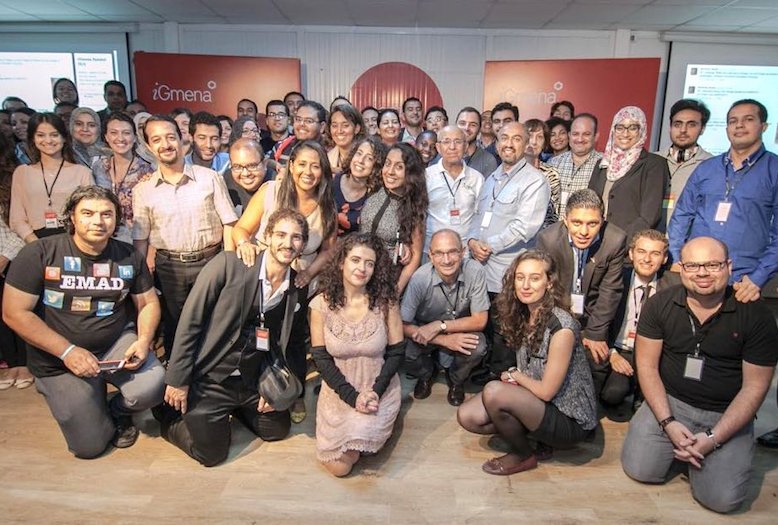
Photo: Hivos for IGMENA.
An APC issue paper published in English, Arabic and French unpacked the challenges facing civil society participation in internet governance in the Middle East and North Africa (MENA) region.
The paper focused on Tunisia, Egypt, Jordan and Lebanon, countries that have a substantial engagement in internet policy both on a global and regional level, as well as local specificities that provide interesting insight on the variety of challenges facing civil society in the region.
APC also advocated for civil society engagement in internet governance in the region by hosting a session on the subject at the IGMENA Summit in Tunis, where it also participated in a session on the role of civil society in strengthening citizen engagement.
In addition, a guide for participants from the MENA region was developed for the global IGF in December, identifying sessions on themes relevant in the region, such as human rights, security, trade and the internet economy.
To watch out for: APC plans to work with our new member in the MENA region, SMEX, to support multistakeholder and transparent internet governance initiatives, inclusive of diverse and independent civil society voices.
Lessons on multistakeholder internet governance from NETmundial
The 2014 Global Multistakeholder Meeting on the Future of Internet
Governance, better known as NETmundial, was a breakthrough both in terms
of what it achieved and how it achieved it.
In 2016, APC published the results of an in-depth study on the NETmundial process, addressing what worked well and what did not, specifically in terms of processes and methodology, and what lessons can be extracted and applied to other global internet governance processes, particularly the Internet Governance Forum.
To watch out for: APC plans to take forward the
lessons learned from NETmundial to other relevant internet governance
processes, such as our efforts to strengthen and improve the IGF, and as
part of our engagement in the UN CSTD Working Group on Enhanced
Cooperation.
Local to global impact through regional and national Internet Governance Forums
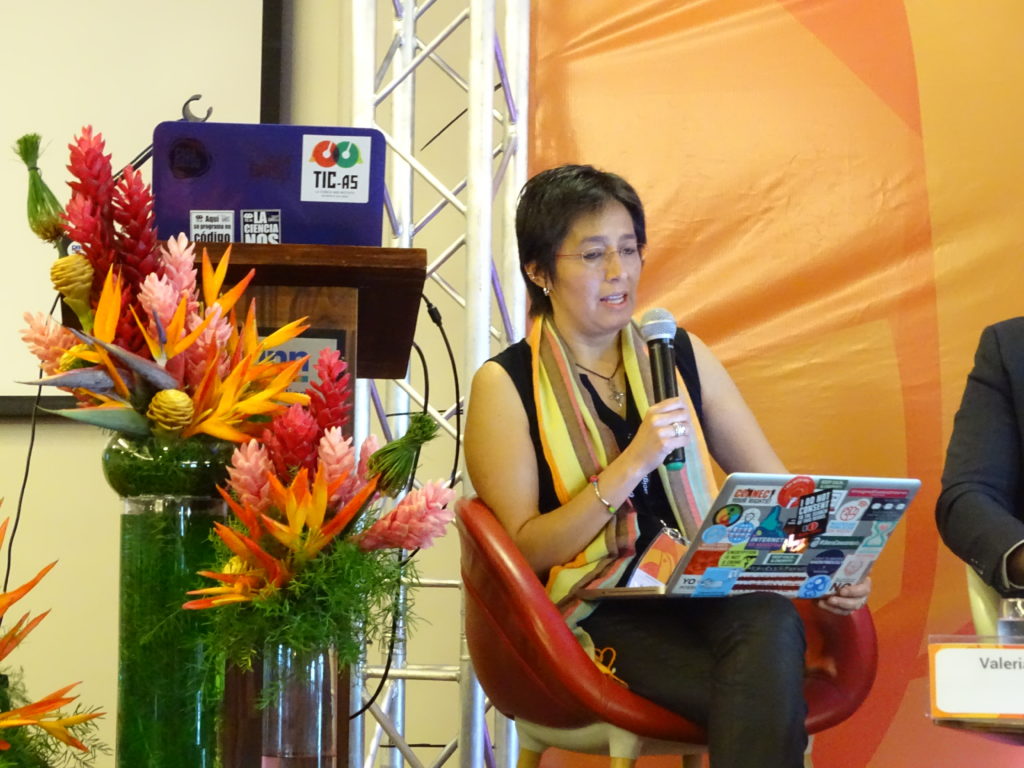
Photo: Valeria Betancourt at the LAC IGF by Arturo Bregaglio.
APC supported and facilitated the participation of several civil society actors in regional and national IGFs. One of these was the Asia and Pacific IGF: 30 people attended the APrIGF with APC support and a women’s human rights consulation was held before the event. APC also co-organised six workshops during this regional forum.
Latin America and the Caribean held its regional IGF in July in Costa Rica, where APC supported the participation of 20 civil society activists to influence regional discussions.
In Africa, 38 graduates and 18 faculty members from the African School on Internet Governance (AfriSIG) participated with APC support in the African IGF, several of them being nominated as panellists and rapporteurs in different sessions. A highlight of this regional forum is that AfriSIG presented a statement on internet shutdowns to the plenary of the African IGF.
On the national level, APC member One World Platform organised the second Bosnia and Herzegovina IGF in Sarajevo, in October 2016, with more than 150 participants from government, business, civil society, the technical community, academia and the media.
The forum covered topics such as universal access to the internet, violent extremism, terrorism, and the right to report, as well as business and human rights in the BiH internet economy. The forum provided sign language translation to enable the participation of people with hearing disabilities.
To watch out for: In 2017, APC will produce publications gathering civil society experiences and perspectives in national and regional IGFs.
Member story: First Kenya School of Internet Governance
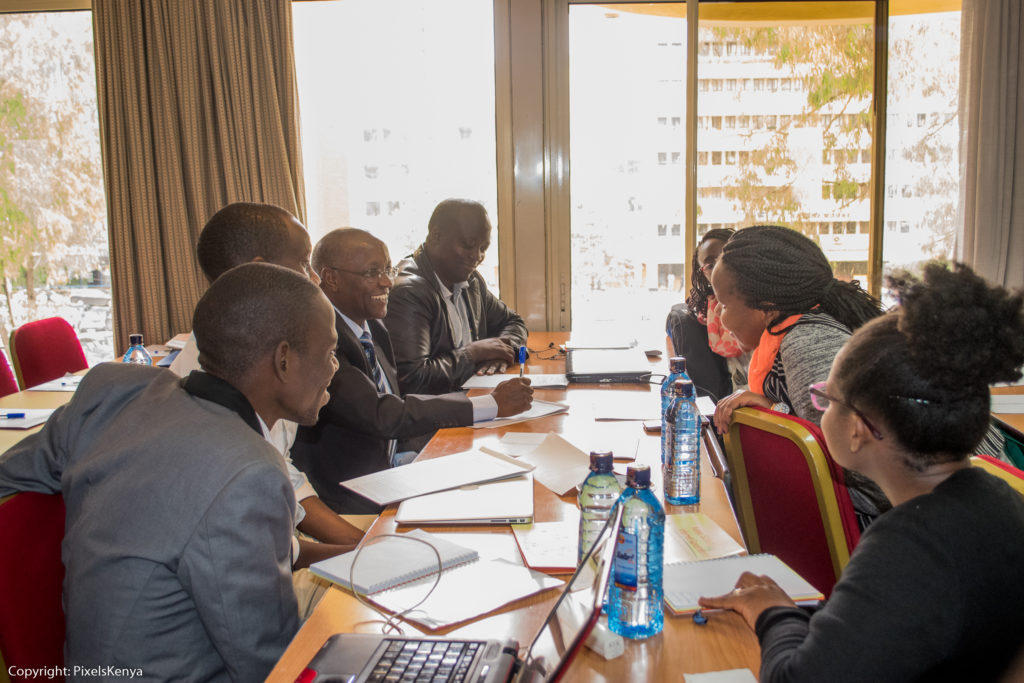
Photo: KeSIG participants group work on stakeholder mapping.
With support from Facebook and Hivos East Africa, the Kenya ICT Action Network (KICTANet) held the first Kenya School of Internet Governance (KeSIG) in November 2016. The school aimed at bringing new voices into ICT policy dialogues.
After convening the Kenya Internet Governance Forum in 2015, KICTANet
realised the Forum had attracted a great deal of interest from the
youth and professional stakeholders from diverse backgrounds.
This was also emphasised during the Kenya ICT Policy Review that was led by KICTANet. The public needed to be educated on public participation in policy processes. In view of this, the school targeted youth and professionals from backgrounds which have not traditionally been active in policy development dialogues.
Participants were taken through an introduction to various issues of internet governance, the different players and engagement processes, in addition to practical sessions where they were trained how to engage in policy dialogues and submit input on different topics.
KICTANet has noted the success of this training, as the participants
are now engaging and making meaningful contributions to ICT policy
processes at both the local and global levels. KICTANet looks forward to
holding the 2nd Kenya School of Internet Governance in 2017.
Member story: Recommendations for more effective civil society representation in state bodies
Photo: Participation for Nature Report cover.
“Participation for Nature: Representation of environmental civil society organisations in councils and other state bodies and local authorities”, a research report by BlueLink.net’s executive editor Pavel Antonov and environmental expert Toma Belev, was released in February 2016.
The report examined 181 mechanisms for civil society participation in Bulgaria, focusing on 24 state institutions responsible for environmental issues.
According to the report’s conclusions, the Bulgarian authorities are still frightened by civil society participation in councils and other bodies and try to keep it under control. As a result, changes in mechanisms for civil society participation are needed in order to make these bodies more effective. For example, there is no civil society representation in some councils, while in others, voting rights are limited, and civil society is thus unable to participate in decision making.
The expert report includes recommendations for more effective civil society participation, such as the clear definition of functions and responsibilities of councils including civil society representatives, harmonisation of quotas in advisory councils, avoidance of seniority as a voting method, and establishment of equal voting rights for NGO representatives. The report was released as a part of the project “Participation for Nature”, implemented by the Bulgarian Biodiversity Foundation partnering with the BlueLink Foundation and supported by the NGO Programme in Bulgaria under the European Economic Area Financial Mechanism.

5. Use and development
Civil society actors, women’s rights and sexual rights advocates have the capacity to confidently use the internet and ICTs, and engage critically in their development.
Confronting the risks posed by media concentration and digital convergence
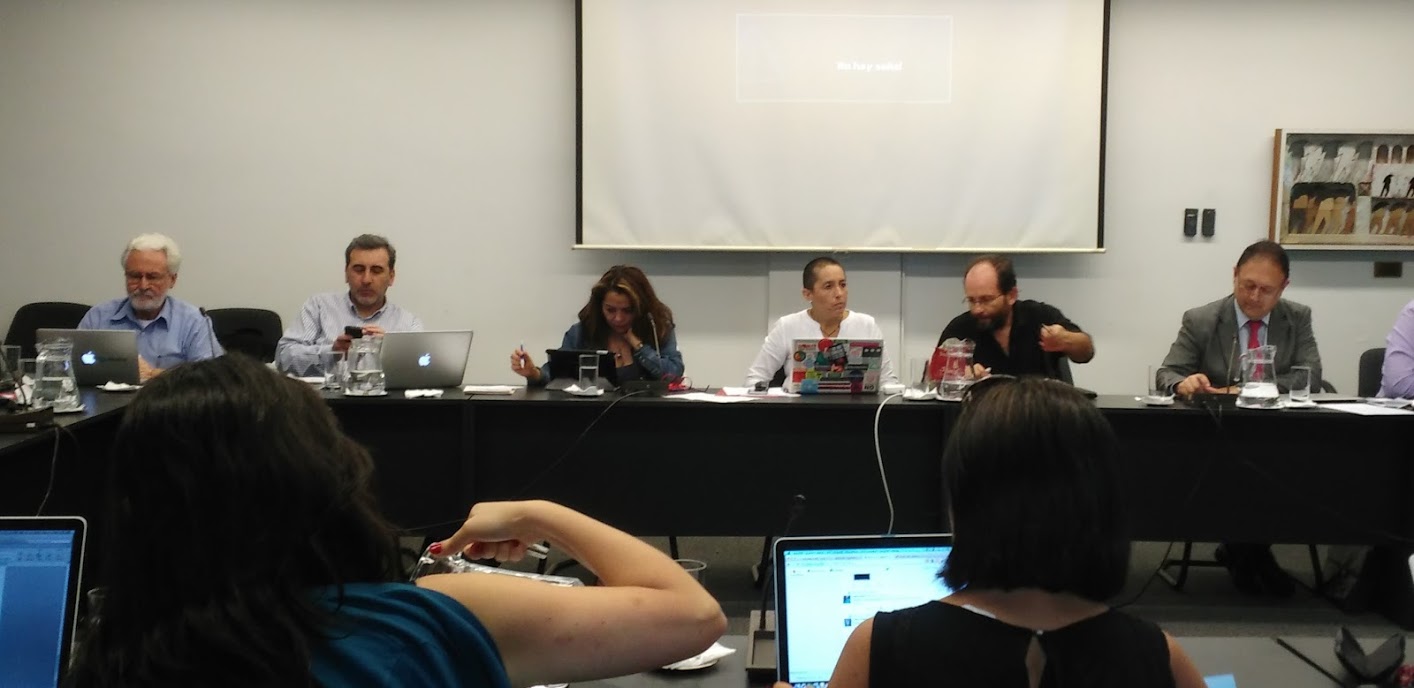
Photo: Valeria Betancourt at the event.
Combined with the imminent analogue-to-digital broadcasting switchover in Latin America and the Caribbean (LAC), there are growing concerns that these dynamics threaten to constrain the potential for media diversity and greater access to information.
To discuss these issues and identify the policy and regulatory strategies needed to strengthen media plurality in this new environment, some 30 civil society experts from eight Latin American countries gathered in February in Montevideo, Uruguay.
The two-day workshop was hosted by the Latin American media observatory, OBSERVACOM, with financial support from APC’s Latin American Digital Migration project.
To watch out for: APC members in the LAC region who are engaged in this advocacy will continue to work on this this theme as part of the network’s regional exchange agenda.
Digital security training with a feminist perspective
Erika Smith has been steadily training a loose coalition of feminist youth activists and communicators in Morelos and Mexico City since April and participated as a resource person for the Gender and Tech Institute on digital security and against online violence held by the Tactical Tech Collective in Ecuador in June, where colleagues from APC members FUNREDES and Colnodo also participated.
The United Nations Office on Drugs and Crime (UNODC) in Mexico cited APC’s rights-based approach to online gender-based violence when they hired Erika to train teachers, police and human rights officials in the State of Durango in order to address the increasing vulnerability of adolescents online.
Access Now engaged the APC Women’s Rights Programme (WRP) to run a webinar on online gender-based violence and sexuality awareness/sensitivity for its helpline staff. WRP was also asked to accompany consultations with other partners around gender, LGBTQI communities and digital security by IFEX, the global network defending and promoting free expression, and the Institute for War and Peace.
EROTICS South Asia project partners also held digital security workshops during the year. In Mumbai, organisations working in gender and sexuality rights from across India attended “The Safety Net Workshop” run by Point of View with APC, using a holistic stance that enabled people to think of security as a way of life.
To watch out for: The FTX: Safety Reboot will become a key tool in facilitating communities to share knowledge and values around representation and expression, and to build confidence and skills to be safe and effective in online spaces.
Second edition of the Digital Security First Aid Kit for Human Rights Defenders
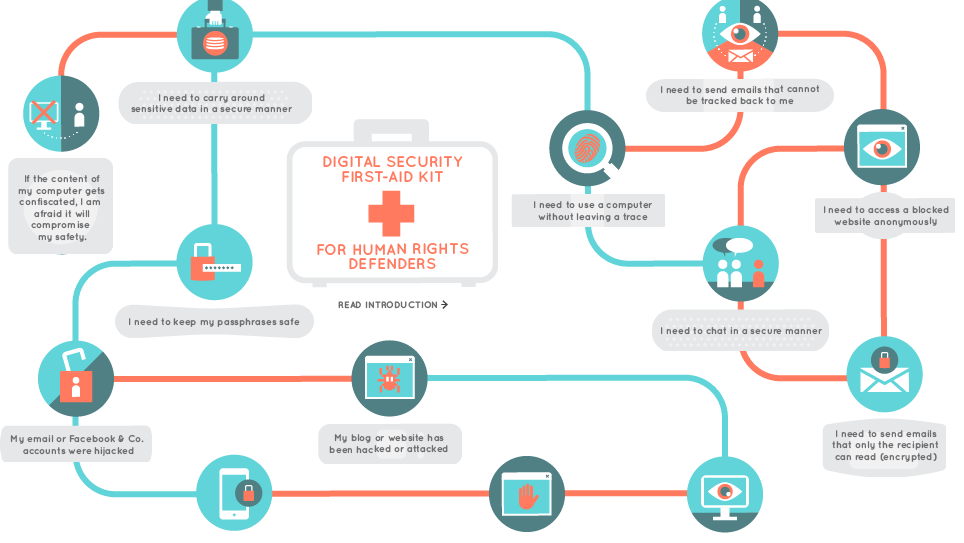
The Digital Security First Aid Kit for Human Rights Defenders is a contribution from activists for activists to help activists be more secure in our digital practices.
It’s designed to help activists deal with the most common security
issues that might jeopardise the integrity of our devices and
communications. Any at-risk user who encounters security-related
problems can use this kit to mitigate the immediate consequences and
find guidance to address ongoing security issues.
The work on this kit has been guided by APC’s many years of work in the area of digital security, particularly its work with human rights defenders, those who deal with digital dangers most frequently as a matter of course in their work.
The second edition of this valuable tool was pre-launched at Mozfest in London, UK, in November 2016, to 24 participants. Its newest version exists online in revision control and uses a standalone platform that improves user engagement.
To watch out for: The kit will be formally
launched in 2017, after the incorporation of an additional module,
aiming to be used by civil society groups in various regions.
Using the internet safely, creatively and strategically with FTX: Safety Reboot
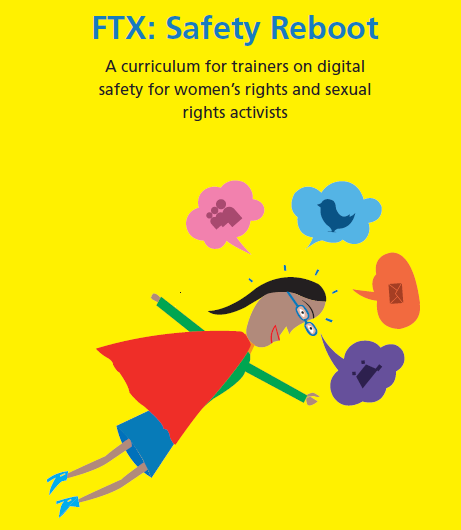
The curriculum aims to enable trainers to build awareness within communities on how to respond to online violence against women and build confidence and skills to be safe and effective in online spaces. Beta modules explore areas such as online gender-based violence, movement-building in a digital age, and the feminist practice and principles of the internet.
To watch out for: In 2017, a network will carry out the testing and sharing of the modules of the FTX: Safety Reboot curriculum. Watch this space as we develop more and more modules!
Member story: Award-winning digital farm records system helps farmers reach their full potential
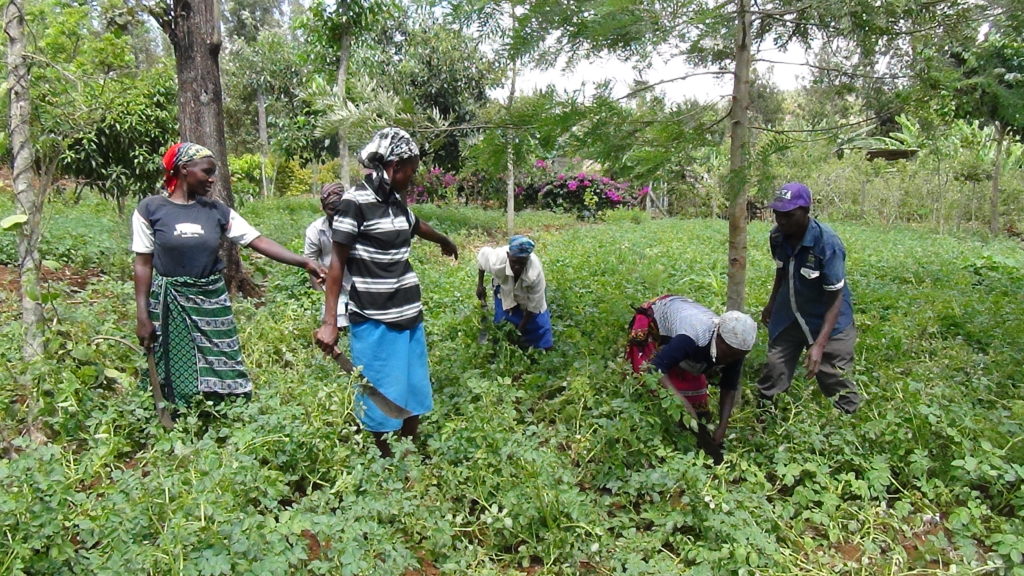
Photo: Farmers tending to potatoes at one of Sokopepe’s demonstration farms at Kiolo village in Meru County @Bob Aston
In the last three years, with the support of ALIN, Sokopepe Ltd has grown from an idea to a start-up currently supporting over 16,000 farmers to develop complete documentation of their farming activities and outcomes.
During the 2016 Connected Kenya Summit, Sokopepe won the Microsoft ICT Innovation Award under the Agriculture category. The award recognised Sokopepe as a start-up that meets Kenya’s blueprint vision to build a vibrant middle-income economy by the year 2030.
Sokopepe’s innovative Farm Records Management Information System (FARMIS) has enabled the development of a comprehensive digital record pathway among Meru County farmers.
The farmers are using the record-keeping data to know which crops are more profitable, and have improved their decision making on the basis of profit and loss statements. They are also able to track all their agribusiness enterprises, schedule different farm events, and track all their expenses, as well as gaining better access to markets. “The beauty of FARMIS is that financial institutions can review our records over a period of time to determine whether we are capable of managing credit,” said Mrs. Emery Kawira, a farmer in Meru County.
Member story: Connected, empowered and secure
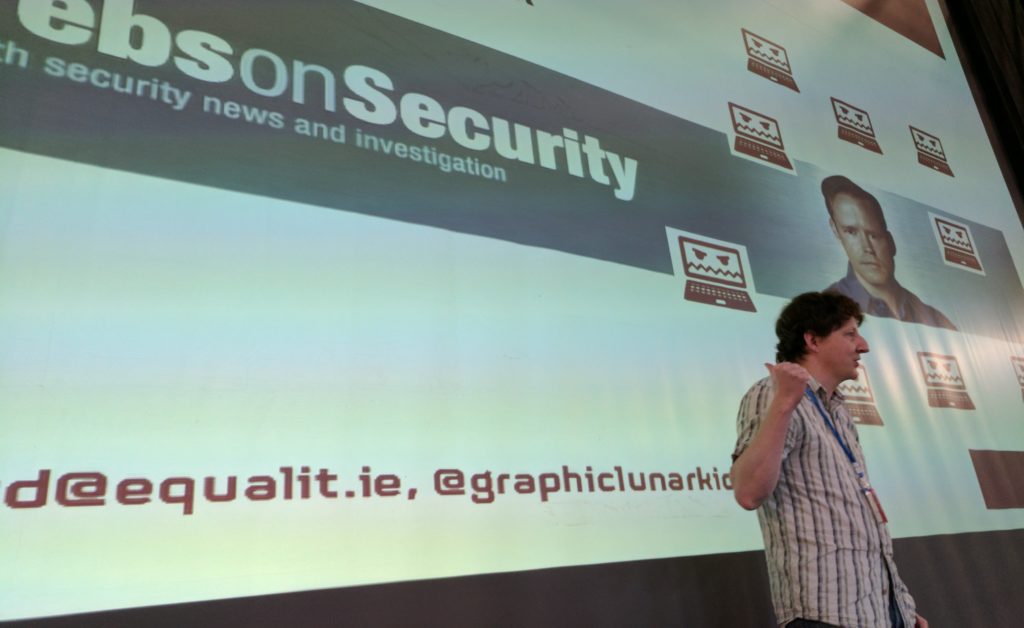
Photo: Richard King presenting Deflect at Freedom Online Conference in San José, Costa Rica, October 2016.
Deflect, the
flagship service that protects websites from distributed denial of
service (DDoS) attacks, saw an influx of new clients signing up for free
mitigation services.
In addition, after two years of writing mathematics and code and a battery of tests, eQualit.ie released the world’s first free/libre end-to-end secure, synchronous protocol for group chat, (n+1)sec, with support from the Open Technology Fund. Thanks to the (n+1)sec project, it will be possible to have secure group chat on various messaging systems, like Jabber/XMPP or IRC. We also wrote a dogfooding client for Pidgin and you can try it out too!
As always, eQualit.ie keeps a focus on its mission
to “promote and defend fundamental freedoms and human rights, including
the free flow of information online.” Whether through free/libre and
open source tools for digital security, conference presentations or
security trainings, eQualit.ie encourages all human rights defenders to
stay connected and stay empowered.
Member story: First digital security school aimed at social movements in Québec
Photo: Alternatives.
Developed in association with the Canada Research Chair in Media Education and Human Rights and the Canadian Internet Registration Authority, ENS514 aims to provide trainings on the use of encryption tools and online resources adapted to the realities and needs of community-based groups, civil society organisations, university researchers and independent media.
The launch of the school proved to be very timely when it was revealed in November 2016 that the private communications of investigative journalists were being surveilled by the Montreal police service. This sparked a great deal of interest in ESN514 from civil society members, leading to a wider range of activities than those originally planned.
In addition to providing training for activist groups, the school has conducted security audits at public events, organised a training session for adolescents at the National Library and Archives of Quebec, and established a partnership with a theatre troupe performing at the celebration of the 375th anniversary of the City of Montreal, all of which have garnered significant media coverage for ESN514.
Member story: Successful pilot for reuse of electronic devices
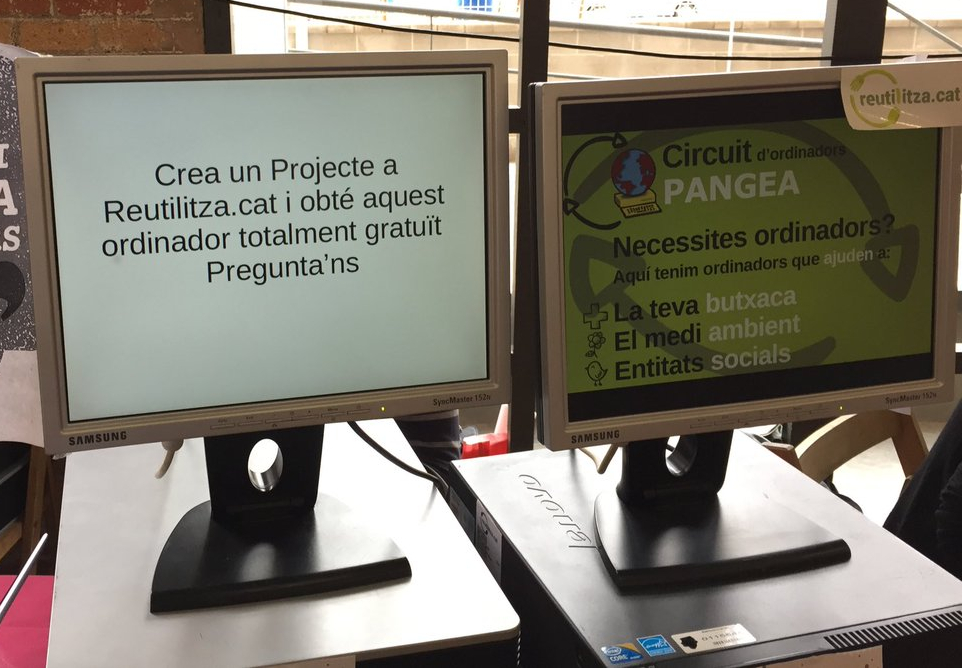
Photo: Pangea.
In 2016, one of the activities undertaken within the project was a pilot involving a real experience of reuse of computer devices. Focused on Barcelona, and in collaboration with other organisations that are members of the eReuse.org community, we established a network of potential donors and beneficiaries. More than 100 devices were collected, revised and prepared for reuse. All these devices were distributed to associations and non-profit programmes here in Barcelona.
It was a successful experience that contributed to improving the software and processes that eReuse.org is developing to facilitate, support and automate the preparation and traceability of these devices. It also helped to increase the interest of civil society associations and circular economy organisations, and even the general public, in the reuse of electronic devices and its benefits.
Now this pilot is being replicated in other places, incorporating all the improvements derived from the pilot experience, with more donors, beneficiaries and social enterprises involved, and with very good initial results and expectations.
Member story: Training for a new generation of IT Girls
Photo: © IT Girls.
IT Girls organised two days of training in five smaller cities across Bosnia and Herzegovina, where the focus was on teaching 15-year-old girls about HTML, CSS and Java Script. The One World Platform team had the amazing opportunity to teach them about digital security and privacy basics. It was a great privilege to introduce them to Ada Lovelace, Hedy Lamarr, Erna Hoover and other remarkable women whose contributions to STEM are not visible enough. We are very proud that we showed them a whole new world, and hopefully some of them will continue to nurture their love for technology. Each city and each group of girls proved to us that our work is meaningful.
The highlight of this experience was the training in the city of Srebrenica and the girls that we met there. The city itself, even 22 years after the war, is still associated with the genocide that took place in 1990, but now, for us, it has a beautiful connotation.
It is a place where girls from different ethnic groups were able to gather around technology, the place where we heard the most inspirational quote of the year, from a 12-year-old girl: “I wish for all women to disappear from the planet for one day, so men would realise how important, amazing and great women are.”
Member story: Women’s hackathon for greener ICT
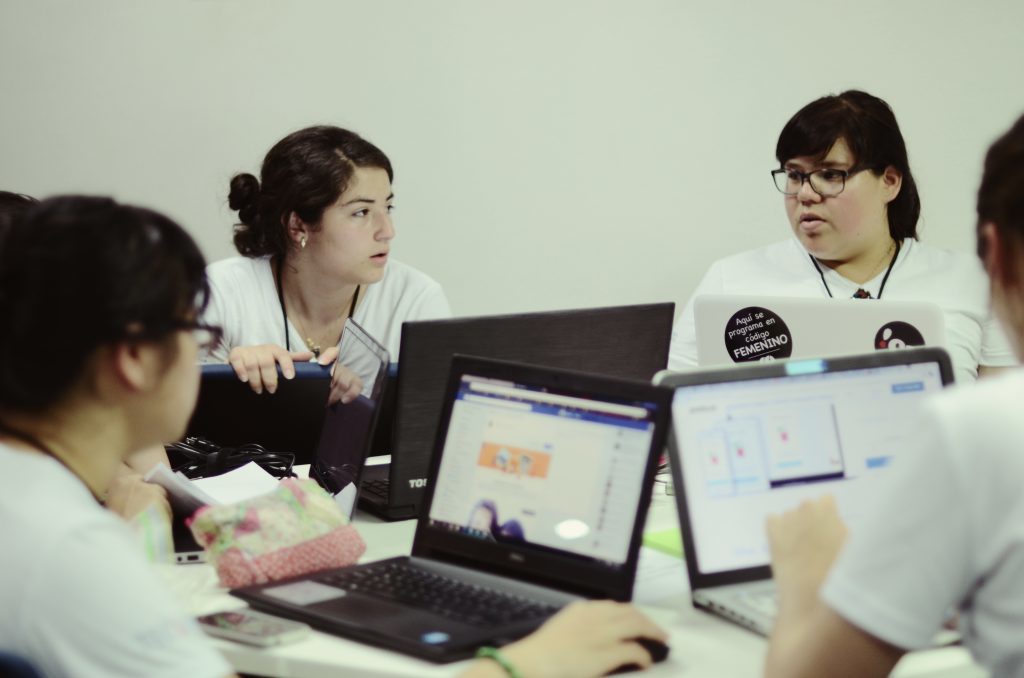
Photo: Angélica Sánchez, Sulá Batsú.
TIC-as seeks to position women in the ICT sector through the creation of education, employment and entrepreneurship opportunities. Among our strategies, the Women’s Hackathon definitely stands out. It is a 36-hour programming contest that takes place in rural areas of Costa Rica. The participants must develop a technological prototype in accordance with the event’s themes and requirements.
The second Women’s Hackathon took place in San Carlos, Alajuela in October, and brought together 44 women from different parts of Costa Rica. They formed 11 teams, which developed 11 technological prototypes that addressed real environmental issues in the region and the whole country. Before, during and after the Hackathon, the contestants were also provided with workshops and mentorships that helped enrich their participation and vocational training. They acquired skills in idea development, prototyping and pitching. Moreover, they were accompanied during the whole process by mentors who are experts and role models from related academic and professional fields, who support the participants with their expertise.
Finally, an awards ceremony was held during the San Carlos Technology Summit 2016, where the participants presented their projects to the public and a panel of high-level judges chose four winners. These prototypes offered solutions to problems such as pollution, waste and protection of national parks.

6. APC community
The APC community of members, allies and partners are strengthened as a network and work collaboratively to use the internet and ICTs for social and environmental justice, gender equality and sustainable development.
APC network experiences record growth in 2016
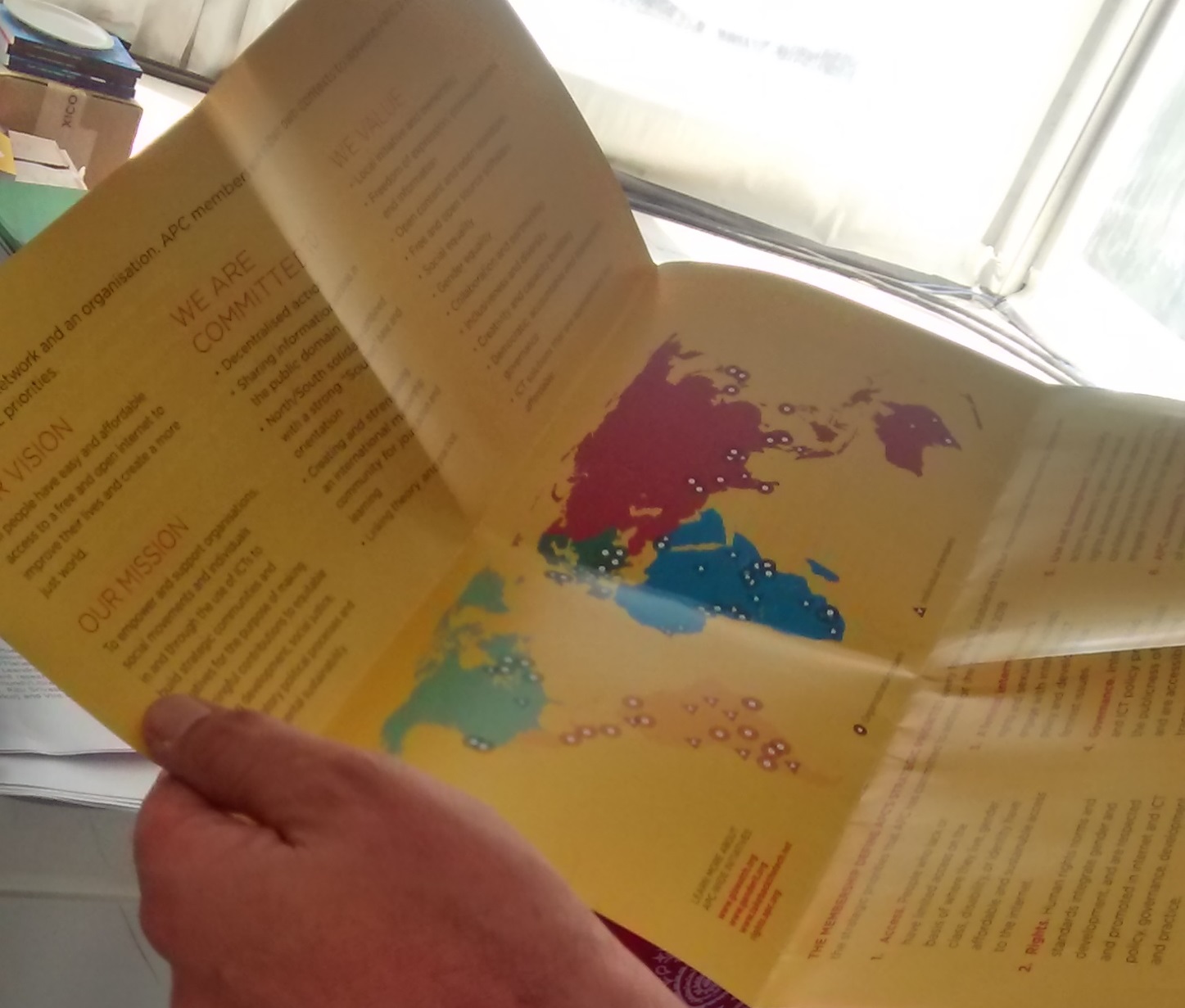
Photo: APC brochure, by Arturo Bregaglio.
APC ended 2016 with a larger membership base than ever before, and our new members have brought valuable new experience and enthusiasm to the network. This was also the year that APC was joined by its first member in the Middle East: SMEX in Lebanon. Up until now, APC was not represented in this region. Although we have collaborated on numerous projects in the Middle East and North Africa (MENA) in the past, APC had no official representation in the region. SMEX’s joining APC opened new networking and collaborative opportunities for the network.
To watch out for: Recent interest in being part of APC means that we are likely to further grow in 2017, both in number of members, as well as in regional distribution and diversity of knowledge in our network. We expect to have new organisations from Europe and North America joining, as well as more than one member in the MENA region by the end of 2017. With these new organisations joining APC in the near future, our capacity in the areas of digital security, autonomous infrastructures, policy advocacy, research, human rights work, and others will further grow. We will also increase our individual membership by having excellent colleagues with whom we have worked in the past joining the network.
APC provided its members with more than a quarter of a million dollars in grants in 2016
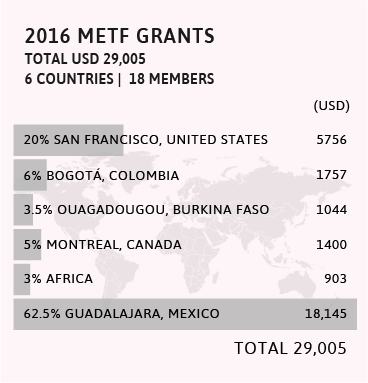
APC awarded a total of USD 267,918 to its members through its grants programme. Eighteen member organisations received 20 grants, 12 of which were project grants of up to USD 20,000 each, while the other eight were research and campaign grants of up to USD 5,000 each.
In addition to these, in 2016 APC supported travel by 18 members with a total of USD 28,584 from the APC Member Exchange and Travel Fund (METF), which supports collaboration among members and participation in events.
METF grants supported four members to attend a RightsCon meeting in San Francisco, two members to attend the Digital Alliance Summit in Bogotá, one member to attend the World Forum on Free Media and World Social Forum in Montreal, one member to attend a training of Francophone trainers in internet governance organised in Burkina Faso, one member to attend the Forum on Internet Freedom in Africa in Kampala, Uganda, and 10 members to attend the Internet Governance Forum 2016, which took place in Guadalajara, Mexico.
To watch out for: A new call for member grants will take place in 2017, and more members will receive financial support to carry on activities that will bring us a step closer to achieving APC’s strategic plan.
Five regional member meetings
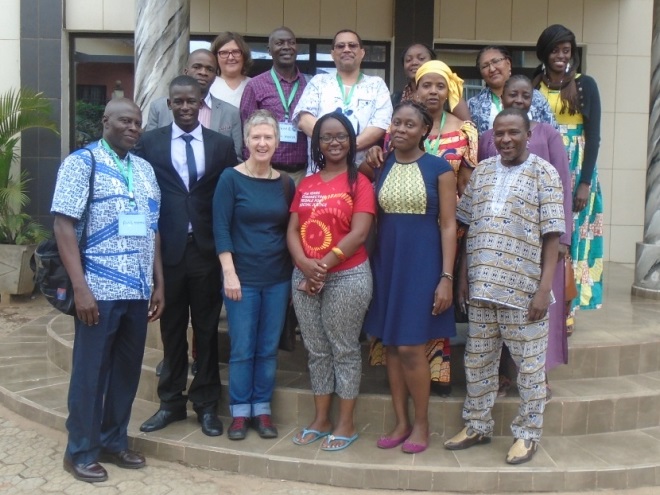
Photo: Africa APC member meeting.
The Africa member meeting took place in Yaoundé, Cameroon, on 12-14 August; the Asia meeting in Dhaka, Bangladesh, on 5-7 October; the meeting for European members was held in Sarajevo, Bosnia and Herzegovina, on 19-20 October; members from Latin America and the Caribbean met in San José, Costa Rica, on 24-25 July; and the North America member meeting took place in Guadalajara, Mexico, on 10-11 December.
The meetings were attended by most of the members in the respective regions. Three of the meetings were co-located with Internet Governance Forums (IGFs), in which APC members played an important role: the global IGF (North America meeting), the LAC regional IGF (LAC meeting), and the Bosnia and Herzegovina national IGF (Europe meeting).
These face-to-face gatherings provided members with the chance to explore opportunities for collaboration, as well as to contribute regional perspectives to the APC network as a whole.
To watch out for: In 2017, APC network members from around the world will gather in South Africa for the triennial face-to-face APC Members Meeting.
Inside the Information Society column provides APC community with food for thought
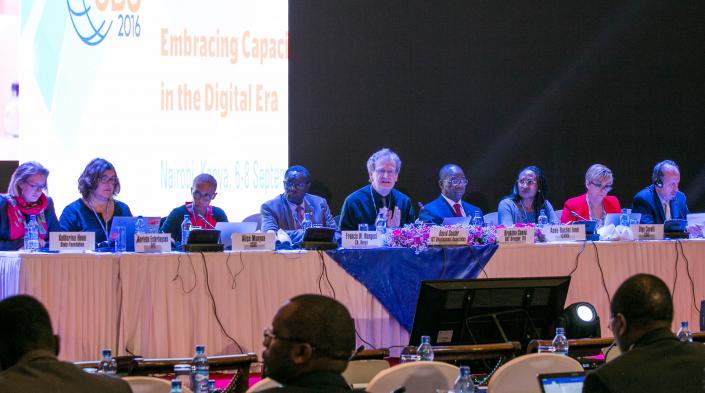
Photo: Moderating the session on capacity building for internet governance at the ITU symposium
In May 2016, David Souter, a longstanding associate of APC who has worked for more than 20 years on the relationship between ICTs and public policy, began writing a weekly blog column for APC called “Inside the Information Society“, looking at different aspects of the information society, development and rights.
David’s pieces take a fresh look at many of the issues that concern APC and its members, with the aim of provoking discussion and debate.
Issues covered include internet governance and sustainable development, human rights and the environment, policy, practice and the use of ICTs by individuals and communities.
A total of 27 posts in 2016 addressed diverse aspects of the information society such as climate change, privacy, governance, work, internet intermediaries, the digital divide, rights, enhanced cooperation, and events such as the WSIS Forum and the Internet Governance Forum.
More about David Souter here. Follow him on Twitter.
To watch out for: In 2017, the Inside the Information Society column will continue raising issues that concern APC and its members, and provoking debate.
Members collaborate on policy-related initiatives
Six APC member organisations – Colnodo, GreenNet, Pangea, Jinbonet, May First/People Link and eQualit.ie – participated in the World Social Forum held in Montreal, Canada, which our individual member Stéphane Couture helped to organise.
At the regional level, African member organisations Fantsuam Foundation, KICTANet and PROTEGE QV took part in the Forum on Internet Freedom in Africa, an event organised by fellow African member CIPESA in September, in Kampala, Uganda.
And our European members BlueLink.net, StrawberryNet and GreenNet took part in the Bosnia and Herzegovina Internet Governance Forum (BHIGF), organised in Sarajevo in October by our member One World Platform.
To watch out for: In 2017, APC will collaborate with members around a number of key internet-related policy spaces, including the Human Rights Council, the 2017 World Summit on the Information Society Forum, RightsCon Brussels, and the Stockholm Internet Forum.
Members join forces to promote community network initiatives
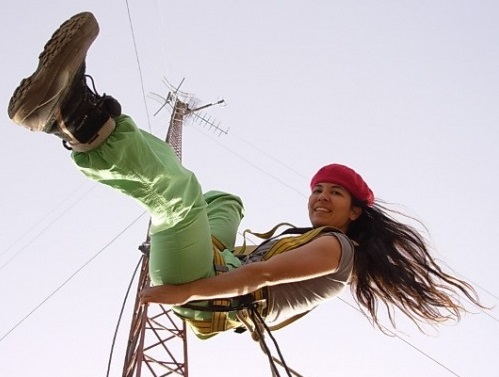
Photo: AlterMundi.
One of these new members, AlterMundi, collaborated with fellow APC members Digital Empowerment Foundation and Pangea within the Dynamic Coalition on Community Connectivity (DC3), which they helped to establish, and which has already made a significant impact in promoting community-operated infrastructures.
A workshop on community networks co-organised by APC and the Internet Society (ISOC) prior to the Dynamic Spectrum Alliance Global Summit in Bogota on 26-28 April brought together APC members involved in building community-owned networks to discuss spectrum and other issues related to creating an enabling environment for community networks to flourish.
The workshop was attended by AlterMundi, Colnodo and Nupef, as well as Rhizomatica, which subsequently became an APC member organisation.
To watch out for: In 2017, APC will significantly focus on creating an enabling environment for communities and local entrepreneurs to solve their own connectivity challenges, and member organisations devoted to promoting community-owned infrastructures will play a major role in these efforts.
Our community’s growing outreach and visibility
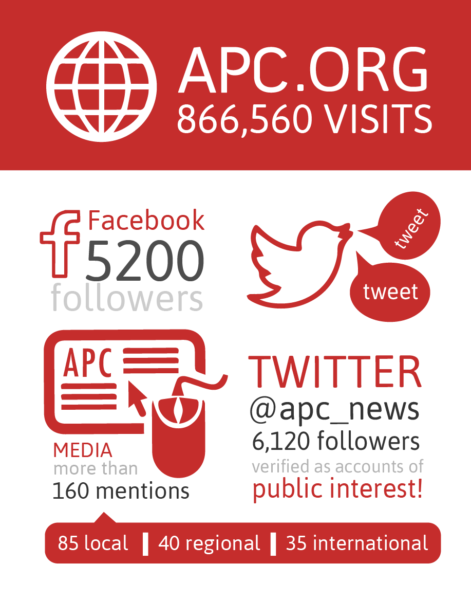
APC.org, our main site, ended 2016 with an annual total of 866,560 visits and 4,936,430 pages read.
In social media, APC reached 5,200 followers on Facebook, with a monthly average of 100 new followers, 2,000 interactions and 10.000 users reached.
On Twitter, APC got its official accounts verified as accounts of public interest. As of 31 December, @apc_news had 6,120 followers in English, an average of 150 new followers monthly, and an average of 300 mentions/interactions per month.
APC’s work had more than 160 mentions by the media (35 being international, 85 local and 40 regional media), in a diversity of regions and languages, including English, French, German, Malaysian, Polish, Portuguese, Spanish and Swedish, and mostly featuring our work on rights and a feminist internet, as well as publications such as statements and research outputs. APC was also quoted in over 20 academic publications from all over the world.
To watch out for: Look out for a completely renovated www.apc.org and many positive changes in our publications.
Individual member highlights
APC opened up membership to individual members in 2012, and was joined by seven that first year. By December 2016, there were 27 individual members in the APC network, from 24 countries on six continents. This year, we decided to launch a new section in the APC Annual Report to learn more about, and from, our individual members. We asked them two questions:
What was your main “discovery” in the field of internet for development, human rights and social justice in 2016? (initiatives, events, networks, policies, etc.)
What was the best technology-related reading you came across in 2016?
Andrew Garton (Australia)

Discovery
For much of 2016 I was completing post-production on Ocean in a Drop – broadband impacts on rural India. Within the translated transcripts stories emerged that had not been as clear on location. The most significant being that the arrival of a single laptop and an internet connection in Muzzafarpur had women gathering for the first time. As they waited to have their government job cards verified on a government website they talked amongst themselves, discovering they all shared the same problems. Poverty, physically abusive husbands and alcoholism destroying the lives of their men. Having come together they formed an NGO that shamed abusive husbands and when necessary would destroy the beer stored by local brewers destined for bottle shops in their village.
Reading
The most compelling tech-related article I read in 2016 was from former Google Design Ethicist Tristan Harris, How Technology Hijacks People’s Minds. Will Tristan’s insights be mirrored across India’s burgeoning rural internet users? I’m not so sure. Too many I had met were not in a position to take the internet home with them and are unlikely to for some years, if not generations to come. Some, like the women in Muzzafarpur, were happy to hand their job cards to the visiting community worker rather than have computers in their homes.
Helen Nyinakiiza (Uganda)

Discovery
I have discovered this, oddly enough, not by networks but by
searching online for digital education resources designed for women and
young girls. The Internet Society of Uganda is a forum for the
discussion of issues that affect internet evolution, development and use
in technical and commercial contexts. The human rights concept here is
catered for indirectly; after all, societies that are empowered
commercially are more likely to respect their human rights.
Reading
I discovered online resources for trainers. There are several organisations like APC that are uploading trainer resources, free of charge! This means that I (as a trainer) can take advantage of curriculum designs, trainer notes, agendas, interactive exercises and an amazing approach to teaching digital security in East Africa.
Japleen Pasricha (India)

Discovery
In 2016, I authored a research report on online violence against women in India, attended many internet-related international conferences (RightsCon 2016, Freedom Online Conference, Internet Governance Forum) and did a lot of networking. This has led to my increased interest in issues at the intersection of gender, technology, media and sexuality, as well as commitment to bridge that gap. To this end, for example, my organisation (Feminism in India) conducts monthly Wikipedia Editathons to reduce the gender gap on Wikipedia. I’d say my discovery is this field, how much I like working on it, and my continued efforts.
Reading
This one: Gendering Surveillance.
Natasha Msonza (Zimbabwe)

Discovery
Because internet shutdowns are increasingly becoming a trend among the acts against freedom of expression used by repressive governments, I learned about the Open Observatory of Network Interference (OONI) initiative and how simple the mechanisms of monitoring and tracking shutdowns are. Collecting evidence of internet shutdowns is essential in formulating advocacy initiatives, for example, in demonstrating the economic cost of such measures. As a result of this discovery, even though shutdowns are not a common thing in Zimbabwe (the last one documented was in July 2016 and lasted a few hours), my network has developed a keen interest to run regular probes and monitor connectivity here so that we establish what normal patterns are, ahead of the 2018 election period, around which we anticipate some interferences might occur.
Reading
The State of Internet Freedom reports produced annually by CIPESA for selected African countries. I did not know of their existence until I was asked to work on the inaugural report for Zimbabwe.
Renata Aquino Ribeiro (Brazil)

Discovery
The Internet Freedom Festival. A (re)discovery since every year I am more convinced that open and safe spaces to discuss the future of the internet and diversity are crucial everywhere.
Reading
The report from the IGF Best Practice Forum on Gender and Access. Incredible findings which mapped fantastic initiatives in the theme.
Publications
Below are just a few of the many publications published by APC in 2016. For a comprehensive list see our 2016 Publications page.
Annual Report 2015
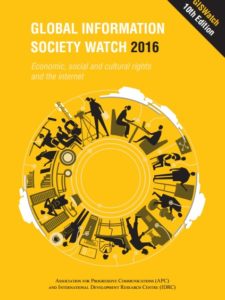
Global Information Society Watch 2016
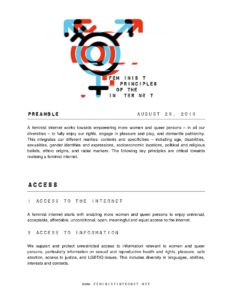
Feminist Principles of the Internet – Version 2.0
Members
In 2016, APC had 51 organisational members active in 60 countries.


 Organisational members
  Individual members
Organisational members
Individual members
In 2016, APC had 27 individual members from 24 countries
Argentina
- Roxana Goldstein
Australia
- Andrew Garton
- Lisa Gye
Bangladesh
- AHM Bazlur Rahman
Brazil
- Mike Jensen
- Vera Vieira
- Renata Aquino Ribeiro
Canada
- Stephane Couture
Colombia
- Mario Morales Rincón
Congo, Republic of
- Patience Luyeye
Czech Republic
- Jan Malík
Ethiopia
- Melaku Girma
France
- Emma Reade
Gambia
- Poncelet Ileleji
Germany
- Jeanette Hofmann
Guinea
- Serge Ziehi
India
- Japleen Pasricha
Italy
- Leonardo Maccari
Jordan
- Inam Ali
Malaysia
- Gayathry Venkiteswaran
Netherlands
- Rolf Kleef
Peru
- Eiko Kawamura
Senegal
- Makane Faye
South Africa
- Towela Nyirenda-Jere
Switzerland
- William Drake
Tunisia
- Rafik Dammak
United States
- Avri Doria
Governance
Board of directors
- Julián Casasbuenas, Colombia (chair)
- Valentina Pellizzer, Bosnia and Herzegovina (vice-chair)
- Liz Probert, United Kingdom (secretary)
- Osama Manzar, India (treasurer)
- Chim Manavy, Cambodia (resigned March 2016)
- John Dada, Nigeria
- Lillian Nalwoga, Uganda
- Anriette Esterhuysen, South Africa (executive director)
Council representatives
Staff team in 2016
- Executive director: Anriette Esterhuysen, South Africa
- Deputy executive director: Chat Garcia Ramilo, Philippines
- Network and membership building coordinator: Karel Novotný, Czech Republic
- Finance manager (until August)/Operations manager (as of September): Karen Banks, Australia/United Kingdom
- Accountant (until August)/Finance manager (as of September): Maya Sooka, South Africa
- Senior finance officer: Fatima Bhyat, South Africa
- HR and finance officer: Misty Tanner, United States
- Administrative officer: Eunice Mwesigwa, South Africa
- Communications manager (until May)/Technical unit coordinator (as of June): Mallory Knodel, Canada
- WRP communications associate (until May)/Communications manager (as of June): Flavia Fascendini, Argentina
- CIPP communications associate: Leila Nachawati Rego, Spain
- Publications coordinator: Lori Nordstrom, Uruguay
- Technical and systems coordinator (until January): Sarah Escandor-Tomas, Philippines
- Technical support assistant: Adolfo Dunayevich Garber, Mexico
- WRP manager: Jac sm Kee, Malaysia
- WRP senior project coordinator: Janine Moolman, South Africa
- WRP project coordinator: Jennifer Radloff, South Africa
- WRP project associate: Erika Smith, Mexico
- GenderIT.org and research coordinator: Katerina Fialova, Czech Republic
- GenderIT.org English editor and content production coordinator: Namita Aavriti, India (as of July)
- PARM and GEM services coordinator: Dafne Plou, Argentina
- Sexual Rights Project coordinator: Nadine Moawad, Lebanon (until September)
- TBTT campaign coordinator: Sara Baker, United States (as of April)
- CIPP manager: Valeria Betancourt, Ecuador
- CIPP administrative assistant: Shawna Finnegan, Canada (until April)
- CIPP volunteer: Avri Doria, United States*
- CIPP assistant: Yolanda Mlonzi** (until June)
- Africa policy coordinator: Emilar Vushe, South Africa (until September)
- ESCR project coordinator: Alan Finlay, South Africa
- GISWatch project coordinator: Roxana Bassi, Argentina
- IMPACT project coordinator: Gayatri Khandhadai, India (as of February)
- IMPACT project assistant: Pavitra Ramanujam, India (as of September)
- Internet access specialist: Mike Jensen, Brazil
- MENA internet rights project coordinator: Mohammed Tarakiyee, Jordan (until March)
- Senior national internet rights advocacy project coordinator: Deborah Brown, United States
* Volunteers
** Interns
Finances
Financial supporters
- African School on Internet Governance (AfriSIG)
AmplifyChange (agreement administered by Mannion Daniels Ltd)
- Building EROTICS Networks in India, Nepal and Sri Lanka
European Union, European Instrument for Democracy and Human Rights (EIDHR)
- Networking for freedom online and offline: Protecting freedom of information, expression and association on the internet in India, Malaysia and Pakistan
Ford Foundation
- Support to research a feminist perspective on internet policy issues and build cross-movement collaboration with women’s rights groups in the global South
Global Fund for Women
- Partnership grant (general support) for the APC Women’s Rights Programme’s AWID Forum activities (September 2016)
Global Partners and Associates
- Sub-grant to organise and implement a workshop on “The Internet as a Driver of Free Expression in Africa”, a side session to the 58th Ordinary Session of the African Commission on Human and Peoples’ Rights in The Gambia
- Internet Governance in the Middle East and North Africa
International Development Research Centre (IDRC)
- A rights-based approach to internet policy and governance for the advancement of economic, social and cultural rights
- Mapping gender and the information society
Open Society Foundations
- Digital media policy in Latin America
- Surveying internet freedoms in Latin America and the Caribbean
- African School on Internet Governance (AfriSIG) via the NEPAD Planning and Coordinating Agency
Sigrid Rausing Trust
- Core support for APC Women’s Rights Programme 2015-2016
Swedish International Development Cooperation Agency (Sida)
- Core support for the APC Strategic Action Plan 2016-2019
Womanity Foundation
- Adapt Take Back the Tech! in Mexico: Challenge norms, build awareness, amplify collective power, strengthen response
- Research on net neutrality
Asia Safe Abortion Partnership/Enterprise to Empower (EN2EM)
- Secure online communications training
Asian-Pacific Resource and Research Centre for Women (ARROW)
- Translation, production and distribution of Spanish edition of ARROW for Change Vol. 22, No. 1, “Sexuality, SRHR, and the Internet”
Friedrich-Ebert-Stiftung, Namibia
- Media workshop facilitation
Fundación Karisma
- Content preparation and conducting two webinars on gender and sexuality awareness/sensitivity for Access Now helpline staff
Global Partners and Associates
- Input on communications strategy for the African Declaration on Internet Rights and Freedoms
- Input on development of video scripts for Global Partners Digital cybercapacity training curriculum
- Developing a policy brief on the Universal Periodic Review, for use as an advocacy tool for internet rights activists
- Research and associated advocacy on broadband infrastructure sharing policies and ownership models in emerging markets
Humanist Institute for Cooperation with Developing Countries (Hivos)
- Making All Voices Count (MAVC) Sinergantara Mentorship
- USABLE project’s Tool Feedback Training workshop in Arabic
iRights.info e.V. (BMZ project number 2016.0162.4)
- Internet Governance Forum (IGF) workshops in South Africa and Mexico to foster freedom of expression on the internet and inclusive and transparent national internet governance and policy processes
Media Foundation for West Africa
- Research on trends in internet governance in the Southern African region
South African Communications Forum
- African DNS study
United Nations Economic and Social Commission for Asia and the Pacific (UNESCAP)
- Gender training for the UNESCAP ICT section (Bangkok, Thailand)
United Nations Fund for Gender Equality via Women’sNet’s “Increasing women’s decision making and influence in internet governance and ICT policy for the realisation of women’s rights in Africa” project
- Gender and Internet Governance Exchange (gigX) at the African School on Internet Governance (AfriSIG) 2016
World Wide Web Foundation
- Affordability drivers survey for the Alliance for Affordable Internet (A4AI)
- African School on Internet Governance (AfriSIG)
AFRINIC Ltd
- African Internet Governance Forum (AfIGF)
Asia Pacific Network Information Centre (APNIC)
- Contribution towards costs of APC Internet Governance Forum (IGF) 2016 gathering
- African School on Internet Governance (AfriSIG)
- African School on Internet Governance (AfriSIG) and Gender and Internet Governance eXchange (gigX)
- African Internet Governance Forum (AfIGF)
- African School on Internet Governance (AfriSIG) and African Internet Governance Forum (AfIGF)
- Outreach at the African Internet Summit (AIS), Gabarone, Botswana
Internet Society (ISOC)
- African School on Internet Governance (AfriSIG) and African Internet Governance Forum (AfIGF)
- Contribution to Disco-tech event and flyers for the Internet Governance Forum (IGF)
Latin America and Caribbean Network Information Centre (LACNIC)
- Contribution towards costs of APC Internet Governance Forum (IGF) 2016 gathering
Public Interest Registry
- African School on Internet Governance (AfriSIG)
APC financial statements for 2016
BALANCE SHEET AT 31 DECEMBER 2016 |
||
|---|---|---|
| 2016(USD) | 2015(USD) | |
| ASSETS | 1,291,397 | 1,195,637 |
| Non-current assets | 2 | 2 |
| Equipment | 2 | 2 |
| Current assets | 1,291,395 | 1,195,635 |
| Accounts receivable | 157,442 | 81,461 |
| Accrued income – grants | 183,689 | 200,028 |
| Cash and cash equivalents | 950,264 | 914,146 |
| TOTAL ASSETS | 1,291,397 | 1,195,637 |
| RESERVES AND LIABILITIES | 1,291,397 | 1,195,637 |
| Reserves and sustainability funds | 477,429 | 447,082 |
| Sustainability funds | 447,496 | 446,848 |
| Retained income | 29,933 | 234 |
| Current liabilities | 813,968 | 748,555 |
| Accounts payable | 85,296 | 81,219 |
| Deferred income from grants | 692,076 | 617,339 |
| Provision for leave pay | 36,596 | 49,997 |
| TOTAL RESERVES AND LIABILITIES | 1,291,397 | 1,195,637 |
INCOME STATEMENT FOR THE YEAR ENDED 31 DECEMBER 2015 |
||
|---|---|---|
| 2016(USD) | 2015(USD) | |
| INCOME | 2,696,117 | 3,003,896 |
| Grants | 2,435,064 | 2,654,924 |
| Earned Income | 261,053 | 348,972 |
| Commissioned services, contributions and event income | 235,862 | 313,729 |
| Interest | 333 | 435 |
| Membership fees | 24,858 | 24,356 |
| Sales and sundry | 10452 | |
| EXPENDITURE | 2,665,770 | 3,400,635 |
| Governance, Programme Development, Monitoring and Evaluation and Administration | 464,112 | 572,968 |
| Communications, Technical and Network Development Units | 630,572 | 388,339 |
| Communications and Information Policy Programme | 1,268,278 | 1,470,905 |
| Women’s Rights Programme | 302,808 | 968,423 |
| SURPLUS/(DEFICIT) FOR THE YEAR | 30,347 | -396,739 |
Note: Detailed information is available in the audited financial statements for 2016.